


Imaginary Versions Of The Real: An Interview with Kirsty Logan
Your second novel, The Gloaming, will be published in May 2018. I gather it is partly inspired by traditional Scottish tales of the sea, but with a contemporary twist—a lesbian mermaid love story.
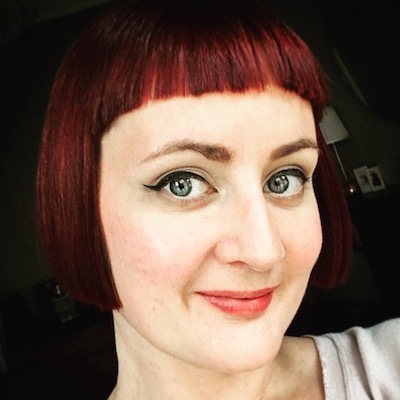 Kirsty Logan is a professional daydreamer. Her first story collection, The Rental Heart & Other Fairytales (Salt, 2014), won the Scott Prize, the Polari First Book Prize, and the Saboteur Award. Her first novel, The Gracekeepers (Harvill Secker, 2015), won a Lambda Literary Award and was selected for the Radio 2 Book Club and the Waterstones Book Club. Her third book, A Portable Shelter, won the Gavin Wallace Fellowship and was published as a limited edition illustrated hardback, which sold most of its print run on pre-order. Her next novel, The Gloaming, is due to be published by Harvill Secker in May 2018. Logan is currently working on a collection of short horror stories, a TV pilot script, and a musical-collaboration project. Her short fiction and poetry has been published in print and online, translated into Japanese and Spanish, recorded for radio and podcasts, exhibited in galleries, and dispensed from a vintage Wurlitzer cigarette machine. Logan has performed her work at festivals and events all over the world, including Denmark, Finland, Germany, Iceland, Ireland, Spain, and the UK. In addition to writing fiction, Logan also reviews books and works as a writing mentor for the WoMentoring Project. She lives in Glasgow.
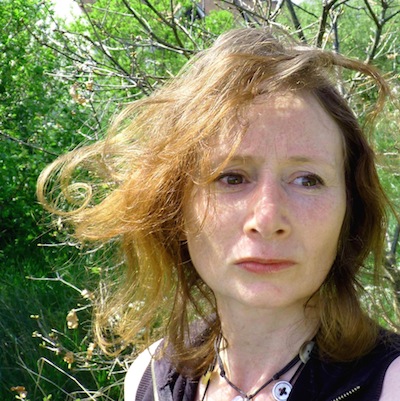 Katy Wimhurst studied social anthropology before doing a PhD on Mexican Surrealism. She has also worked in publishing, but now has a chronic illness. She writes fiction and non-fiction and has been published in various magazines and anthologies, including The Guardian, Black Pear Press, Fabula Press, To Hull and Back Anthology, Cafe Irreal, and Breath and Shadows. She won the Earlyworks Short Story Prize and the Tate Modern TH2058 competition. She interviews writers for www.shortstory.co.uk and other literary magazines. She interviewed Gail Anderson-Dargatz in The Puritan’s Issue 36.
Logan answered questions from Wimhurst via email.
This interview has been edited for length and clarity.
Katy Wimhurst: Your second novel, The Gloaming, will be published in May 2018. I gather it is partly inspired by traditional Scottish tales of the sea, but with a contemporary twist—a lesbian mermaid love story. Can you tell me a bit about the book?
Kirsty Logan: The Gloaming is a queer mermaid love story, and also a domestic drama about a family on a small Scottish island that is slowly turning them to stone.
It’s a loose prequel to my previous novel, The Gracekeepers, which was about a circus boat in a flooded world. They don’t have overlapping characters or settings, but examine the same themes from a new angle: water myths of selkies and mermaids, the relationship between sea and land, queer love and identity, mother-daughter conflicts, the complexities of family, the ambivalent desires for the security of here and the adventure of away.
It’s part of a trilogy: The Gracekeepers is set in the future, The Gloaming in the present, and The Gramarye (the next book, about Icelandic witches and a world that worships light) in the past. But because I write magical realism, or fantasy, it’s not the real past or present or future; it’s my own imaginary version of it.
KW: How did the writing of The Gloaming compare with that of your first novel, The Gracekeepers? I understand that you find short stories a more natural form of writing.
KL: I hated just about every moment of writing The Gloaming. It was an enormous struggle and I’m so happy that it’s over. Second novel syndrome is real. I thought I could get around it; although it’s my second novel it’s my fourth book. But it seems it doesn’t work that way.
The thing about writing your first novel is that you don’t know it’s your first novel. I wrote four other novels before I managed one that was publishable, so while writing The Gracekeepers I just thought, “Okay, give this another go, you’ll get there eventually.” If I’d known how much of a fuss would happen over it, how many countries it would be sold in, how many times I’d read from it—I don’t think I could have written it. There’s a lot to be said for writing in silence and darkness, having few expectations from yourself or from others. But after you get a few snarky reviews, every sentence you write you hear quoted back in the snarky reviewer’s voice. Still, I had to finish it. What choice have I got—stop writing? Never.
Short stories come more naturally to me, as I like to play with form and language and I find that much easier and more effective to sustain in the short form. I think my brain works in short stories. For a long time, my career goal was to direct music videos, and I think in a parallel universe that’s what I do. But when an idea is for a novel, it has to be a novel; you can’t squeeze a narrative into a size or shape it doesn’t fit.
KW: Was there an imaginative link from music videos to stories? Some ’90s videos, for instance, seem to play on a kind of fairytale space. Was that something formative? Or are there any music videos that influenced the stories you write?
KL: I couldn’t even list all the ’90s and early-2000s music videos that have influenced my stories. There are so many. I used to watch MTV obsessively, for hours. I recorded the late-night shows like Alternative Nation and 120 Minutes (on VHS, because I’m ancient) and watched them over and over. The visuals, colours, sounds, cuts, shape of so many of them are imprinted on my brain, so when I sit down to write I’m not even aware of how they seep into my work. One I know for sure is Tori Amos’s video for Spark, which directly influenced a story in my collection-in-progress, Watch the Wall, My Darling, While the Gentlemen Go By. I love Tori Amos’s videos—also Fiona Apple, FKA Twigs, Kylie Minogue, Pink, Madonna, Lily Allen. I like female singers’ videos. Hole’s videos are my favourite—I don’t even know how many of my stories came, even tangentially, from “Violet.”
I’m very inspired by visuals—I make Pinterest mood boards for all my books (here’s one for The Gracekeepers and one for The Gloaming—both have music videos pinned to them, too). I still use music videos as inspiration a lot. It’s something about the mix of visuals and sound, but with no dialogue or need to tell a coherent narrative, as you find in most short films. I’m currently working on a film screenplay, and I watched the videos for Chet Faker’s “Gold” and Sia’s “Elastic Heart” dozens of times. The screenplay doesn’t directly use any of the imagery from those videos—more of the tone and style of them. I’m also really into YouTube videos of film and TV clips put to a song—like a DIY music video. If I’d been born in 2001, that’s what I’d be making right now.
Katy Wimhurst studied social anthropology before doing a PhD on Mexican Surrealism. She has also worked in publishing, but now has a chronic illness. She writes fiction and non-fiction and has been published in various magazines and anthologies, including The Guardian, Black Pear Press, Fabula Press, To Hull and Back Anthology, Cafe Irreal, and Breath and Shadows. She won the Earlyworks Short Story Prize and the Tate Modern TH2058 competition. She interviews writers for www.shortstory.co.uk and other literary magazines. She interviewed Gail Anderson-Dargatz in The Puritan’s Issue 36.
Logan answered questions from Wimhurst via email.
This interview has been edited for length and clarity.
Katy Wimhurst: Your second novel, The Gloaming, will be published in May 2018. I gather it is partly inspired by traditional Scottish tales of the sea, but with a contemporary twist—a lesbian mermaid love story. Can you tell me a bit about the book?
Kirsty Logan: The Gloaming is a queer mermaid love story, and also a domestic drama about a family on a small Scottish island that is slowly turning them to stone.
It’s a loose prequel to my previous novel, The Gracekeepers, which was about a circus boat in a flooded world. They don’t have overlapping characters or settings, but examine the same themes from a new angle: water myths of selkies and mermaids, the relationship between sea and land, queer love and identity, mother-daughter conflicts, the complexities of family, the ambivalent desires for the security of here and the adventure of away.
It’s part of a trilogy: The Gracekeepers is set in the future, The Gloaming in the present, and The Gramarye (the next book, about Icelandic witches and a world that worships light) in the past. But because I write magical realism, or fantasy, it’s not the real past or present or future; it’s my own imaginary version of it.
KW: How did the writing of The Gloaming compare with that of your first novel, The Gracekeepers? I understand that you find short stories a more natural form of writing.
KL: I hated just about every moment of writing The Gloaming. It was an enormous struggle and I’m so happy that it’s over. Second novel syndrome is real. I thought I could get around it; although it’s my second novel it’s my fourth book. But it seems it doesn’t work that way.
The thing about writing your first novel is that you don’t know it’s your first novel. I wrote four other novels before I managed one that was publishable, so while writing The Gracekeepers I just thought, “Okay, give this another go, you’ll get there eventually.” If I’d known how much of a fuss would happen over it, how many countries it would be sold in, how many times I’d read from it—I don’t think I could have written it. There’s a lot to be said for writing in silence and darkness, having few expectations from yourself or from others. But after you get a few snarky reviews, every sentence you write you hear quoted back in the snarky reviewer’s voice. Still, I had to finish it. What choice have I got—stop writing? Never.
Short stories come more naturally to me, as I like to play with form and language and I find that much easier and more effective to sustain in the short form. I think my brain works in short stories. For a long time, my career goal was to direct music videos, and I think in a parallel universe that’s what I do. But when an idea is for a novel, it has to be a novel; you can’t squeeze a narrative into a size or shape it doesn’t fit.
KW: Was there an imaginative link from music videos to stories? Some ’90s videos, for instance, seem to play on a kind of fairytale space. Was that something formative? Or are there any music videos that influenced the stories you write?
KL: I couldn’t even list all the ’90s and early-2000s music videos that have influenced my stories. There are so many. I used to watch MTV obsessively, for hours. I recorded the late-night shows like Alternative Nation and 120 Minutes (on VHS, because I’m ancient) and watched them over and over. The visuals, colours, sounds, cuts, shape of so many of them are imprinted on my brain, so when I sit down to write I’m not even aware of how they seep into my work. One I know for sure is Tori Amos’s video for Spark, which directly influenced a story in my collection-in-progress, Watch the Wall, My Darling, While the Gentlemen Go By. I love Tori Amos’s videos—also Fiona Apple, FKA Twigs, Kylie Minogue, Pink, Madonna, Lily Allen. I like female singers’ videos. Hole’s videos are my favourite—I don’t even know how many of my stories came, even tangentially, from “Violet.”
I’m very inspired by visuals—I make Pinterest mood boards for all my books (here’s one for The Gracekeepers and one for The Gloaming—both have music videos pinned to them, too). I still use music videos as inspiration a lot. It’s something about the mix of visuals and sound, but with no dialogue or need to tell a coherent narrative, as you find in most short films. I’m currently working on a film screenplay, and I watched the videos for Chet Faker’s “Gold” and Sia’s “Elastic Heart” dozens of times. The screenplay doesn’t directly use any of the imagery from those videos—more of the tone and style of them. I’m also really into YouTube videos of film and TV clips put to a song—like a DIY music video. If I’d been born in 2001, that’s what I’d be making right now.
KW: Themes of identity and difference are central to The Gracekeepers, which is set in a dystopic future where sea-levels have risen. Only after Callanish meets North, who is pregnant with a human-fish baby, can she begin to accept her own webbed hands and gills. Several characters from the circus—Melia and Whitby, the glamours, the clowns—play with gender ambiguity. At the end of the novel, North says to Callanish, “Look around you. Look at us. Is it so bad to be different?” Exploration of identity and difference recurs in some of your short stories too, such as “Coll and Una Are Not Friends” (The Rental Heart) and “Finch” (A Portable Shelter). Why do you come back to these themes in your writing? KL: Reviews of my books often mention the way they normalise queer relationships, with all sexual and gender identities presented without comment, just as part of the story. I’m glad that people are picking up on that, though it’s not something I did on purpose. I just write the world the way I see it. Sexualities and gender identities have always been something I accepted, in myself and others, and certainly not the most important part of someone’s identity. We can be queer while also being a lot of other, more important things too. As a queer teenager, I was bored by coming out stories, because I didn’t have a particularly dramatic coming out, and nothing about my sexuality has been particularly dramatic ever since. I live a nice, quiet life with my wife, and as far as I can tell no one in either of our lives has ever been anything but happy for us. Lucky, yes, but that’s how it is. And that’s certainly not the only type of love I try to write.
As a queer teenager, I was bored by coming out stories, because I didn’t have a particularly dramatic coming out, and nothing about my sexuality has been particularly dramatic ever since.I try to present a whole spectrum of different sexual and gender identities, from healthy to unhealthy, from hetero to homo, with plenty in between. There’s no correct way to be. It’s just how I see the world: I don’t think it’s as simple as one or the other. It’s false to portray every relationship as happy, but then it’s false to portray every relationship as unhappy as well. Love, identity, family—these things are complex, and I want to explore those complexities. KW: In The Gracekeepers, Callinish’s selkie characteristics—her webbed hands and gills—are used in part to meditate on her identity. In “Coll & Una Are Not Friends” (The Rental Heart), Coll’s tiger tail and Una’s antlers are used to explore what it’s like to feel “different” as a teenager; Coll and Una have distinct reactions to being a “freak.” In “The Rental Heart,” the female protagonist buys a metal heart after hers is broken, to protect her from further emotional pain. In “The Light Eater,” the unnamed female protagonist swallows light-bulbs, because “life is so dark without him.” Do you always use the fabulous or magical elements in your stories to talk—in an oblique and inventive manner—about very real aspects of human experience? KL: Everything I write is perfectly logical to me. Stories develop as a literal exploration of a feeling or thought. I had my heart broken and thought, rather melodramatically, as you do when you’ve been dumped, “This hurts so much that I wish I could take out my heart and get a new one.” And so “The Rental Heart” came to be. Then I had a boyfriend in the merchant navy, and when he was away I became very lonely and developed these pseudo-relationships with other people, as sort of filler until my boyfriend got back—so another story, “Origami,” is about a woman who makes a man out of paper. My dad was an alcoholic and we never seemed to speak about it, and when we did speak about it the words never came out right—so there was another, “Bibliophagy,” about a man who secretly eats paper. After his death, the world seemed so dark and cold to me, and I wanted a way to bring more light and warmth into myself—there was “The Light Eater.” As a teenager, I often felt like an outsider, strange and awkward in my skin, as if I had antlers or a tail—and there’s “Una & Coll Are Not Friends.” I know the stories read as fantastical, surreal at times, but they follow a logical thought pattern. This plan was never one I thought through—“oh, I know, I’m going to write magical realism and talk in oblique and inventive manner about my experiences”—but it’s just the way my brain works. KW: The short story we published here, “We Can Make Something Grow Between the Mushrooms and the Snow,” has magical elements—strange places that the couple are viewing: the mushroom house, the cave house, the bird house—but these merge seamlessly with the everyday event of a property search. This aesthetic characterizes your writing—what Salman Rushdie calls the co-mingling of the improbable and the mundane, what some call magical realism. Why do you like mixing the magical with the mundane in this way? KL: I wouldn’t know how to do it any other way. To write cold, hard realism—I just couldn’t do it, even if I tried. Strange magic would creep in somehow. I try to write about a woman in a house—somehow the house is made of mushroom, or there’s a ghost writing on her arms as she sleeps, or the ceiling gets a little bit lower every morning until the stars start to burn her. I’ve tried to write stories that aren’t strange. They never really work. We all have different ways of thinking, and you have to just do what you do. KW: Carolyn is a strong female protagonist linked to myth and magic in some way. She is a complex character, too. On the one hand, she is independent minded, the bread winner, and is struggling with a relatable female conflict—wanting to pursue her meaningful work, while having to meet the constant needs of a newborn child. On the other hand, she is unwilling to compromise in her marriage, refers to her child as “it,” and the end of the story intimates a sinister resolution to her conflict, harking back to old Icelandic ritual practices. How do you think readers might respond to Carolyn as a character? KL: After a story is written, it’s sometimes difficult for the writer to know what was intentional and what wasn’t. Of course, I consciously try to kick back against traditional, stereotypical depictions of women and motherhood in my writing. But I don’t know if I was doing that here, or it’s just how I imagined Carolyn. Having a baby doesn’t necessarily make you maternal, just as fathering a child doesn’t necessarily make you paternal. Although no writer writes a character exactly like them, I think every character we write is a small part of us. No one who knows me would say I’m similar to Carolyn, but she’s what I fear I am (after all, it is a horror story— I write what I fear). She doesn’t react to things the way I would, but the things she fears and worries about are my own feelings. Of course, I wouldn’t leave a baby out on the ice. Of course, almost no one in the world would—except that if you look into changeling stories, that’s exactly what people did. Whether or not they really believed doing so would make the fairies take away their horrible fake babies and give back their beautiful real babies—well, we can never know that. But everything suggests that these things did happen, even if rarely. And here’s a little Easter egg: this story is part of a collection of horror stories, and all the characters in the stories are named after characters in my favourite horror films. Carolyn and Richard are named after Radha Mitchell’s and Vin Diesel’s characters in Pitch Black. So, just for fun, if you want to picture the characters as those actors, that works for me. KW: On one level, the story has the imaginative and sometimes humorous element of the estate agency blurbs. On another level, both the subject of marital tensions and the intimated ending are dark. Are dark subjects more digestible if nestled in magic and wonder? KL: The world is dark, and also full of wonder and magic. I don’t write stories like that because I think it makes them digestible; it’s because that’s how I think the world is.
KW: Formal invention seems common in your short stories: for instance, “Underskirts,” shortlisted for the Bridport Prize (and published in The Rental Heart), tells a story of a lesbian lady and her maidservants, from multiple points of view. “Sleeping Beauty” (The Rental Heart) is told in reverse-chronological order. “The Exact Sound of Grief” (A Portable Shelter) is a blank page. What appeals to you about formal experimentation in writing? KL: I’m easily bored. If I’ve used a story structure once, it doesn’t really appeal to me to use it again unless I can put a new spin on it. As I said, everyone’s brain works differently, and that’s how mine works—part of growing and maturing is learning your own mind. I’m still relatively young as a writer, so I have a lot to learn. I try to look in as well as out. I love to play with different ways to tell a story. How much can I toy with structure while still telling a good narrative? How few words can I use? Can I have a story that’s an auction catalogue? A list of items? What about a list of instructions? Can I have multiple voices? How many? Can I have one voice that loops around and repeats itself, changing a little each time? A diary, with parts redacted? Two voices telling different versions of the same story? A questionnaire without answers?
I hope that if my work grows stale, it’s because the gender and sexuality in it seems quaint since we’ve moved so far past it.I’ve been experimenting a lot in the past year, working on screenplays and narrative photo projects, and writing songs with musicians. This summer I worked with a harpist, Esther Swift, and a singer/songwriter, Kirsty Law. Together we created “Lord Fox,” a 40-minute show based on a folktale that was a mixture of all our approaches, with voice and harp carrying the narrative just as much as the words. It debuted in Edinburgh in August, and in November we took it to a literary festival in Malaysia. Since it’s already been performed on opposite sides of the world, hopefully we’ll get to take it to the rest of the world now. KW: Your short stories like “Witch,” “Tiger’s Palace,” “Sleeping Beauty,” and “Keep” (from The Rental Heart and A Portable Shelter) sit within a contrary feminist tradition of retelling fairytales with female experience and sexuality at their core. Some have even compared you to Angela Carter, at her “best.” I’ve read that you’re interested in rewriting fairy tales by examining their deep structures rather than looking at them on a more superficial level. Could you elaborate a bit on what you mean by a deep-level rewriting, perhaps using one or two of your stories to expand this idea? KL: One day I hope to be worthy of such a title! Angela Carter was a huge influence on me, as was Emma Donoghue’s Kissing the Witch; this book still, to my mind, contains the best LGBT fairytale retellings. Both Carter’s and Donoghue’s books work hard to upend the stories, rather than just update a few flimsy details. As Carter put it: “I am all for putting new wine in old bottles, especially if the pressure of the new wine makes the bottles explode.” That’s what I want to do with my stories, too. Let’s take a retelling of Snow White where the roles are reversed—the witch is good and Snow White is wicked—which might seem new and different. But it’s still a story of two women in opposition, purity and evil, virgin and whore; it doesn’t actually change the story at its (rotten) heart. Telling the exact same story in the past, or in the future, or in a different society—that’s all fine, and I’m not saying writers shouldn’t do it. But it’s not particularly interesting to me. These stories are ours to do with what we want—so why would we let them say the same old things? Instead, let’s use them to say the things we think are important. Let’s shake them and see what falls out. Let’s add major characters, take major characters away, strip everything out until we leave only the very bones of the story. Or leave only one single bone to hold it together, one strand of hair, one drop of dye from the old story to tint the fresh new one. So in my third book, A Portable Shelter, when I wanted to retell the story of Bluebeard. I changed the surface by having the setting be not a huge looming castle, but a caravan (small, cramped, but equally full of hidden places). But I wanted to go deeper, and I had never liked the way that the protagonist was saved by her brothers in the original story, or that the murdered wives didn’t get voices or identities. So I had the story narrated by the multiple-first-person voice of all Bluebeard’s murdered wives; a sort of Greek chorus of women, who eventually save his new wife—though, really, she saves herself.
I didn’t die in Iceland or in Spain, though I wrote plenty of stories about people who did.Fairytales are still told for a reason: there’s truth and darkness in them, as well as magic and beauty. But we should never just swallow old wisdom without looking at it. Like food, ideas grow stale and, eventually, poisonous. Social and cultural mores change (usually for the better). Some tales are ableist, sexist, or dismissive of particular races or backgrounds. This lack can be good for a writer, as these issues can be explored in a retelling and considered in an intelligent way. But I don’t feel that outdated prejudices should ever just be regurgitated without comment. The racism in the books of, say, Agatha Christie or HP Lovecraft (or dozens of other writers) would absolutely not be acceptable in a modern-written novel. But those books are of their time; we read them for their plots or world-building or prose, and modern readers can struggle with the prejudices of the time—I know that I struggle to see past those things. I’m sure it will be the same thing 100 years in the future. If anyone is still reading my work then, I’m sure it will seem very dated in its treatment of sexuality and gender, for example. But I find that reassuring, to think how the world changes so fast and continues to change. What seems shocking now will be stale, and possibly even poisonous, in the future. To present a same-sex couple as an unremarkable part of a narrative—honestly, it’s shameful that these things are even worthy of comment in this day and age. I hope that if my work grows stale, it’s because the gender and sexuality in it seems quaint since we’ve moved so far past it
KW: You were Granada’s writer in residence for the UNESCO City of Literature project at the end of 2017. What did that entail? KL: It was a strange residency—definitely the strangest I’ve done. I’ve spent month-long residencies in Iceland, Finland, and several places in Scotland and England, and they were all wonderful and odd in their own ways. The Granada residency was different as it was in a city, whereas the others were all remote. I don’t speak Spanish (beyond hola, gracias, vinto tinto por favor) and was dropped in the middle of the city with no map and no guidance. I barely heard from the organisers all month. They’d promised I’d be doing lectures, workshops, readings, social events, etc., but none of that actually materialized—mañana, mañana. So I went along with the strangeness and spent my days having meals with the other writer in residence (Petra, a Slovenian poet), swimming, walking down a dusty bike trail that led in a straight line apparently forever (I walked down it for three hours every day and never got anywhere),\ making friends with the local café’s resident dog, and—my favourite thing—making up stories. I was working on two horror screenplays, and spent more time in the worlds I’d made up than the real one. I also got really fascinated by the pictures of the crying Virgin Mary that were everywhere—most memorably on the walls of the hot, airless, indoor butchers’ market. It’s a strange juxtaposition—enormous slabs of red meat and beatific crying woman—that I lifted the image directly for one of the screenplays. I tried to explain this fascination to the mayor of Granada during a press conference and he wasn’t very impressed that this was my main takeaway from his beautiful, ancient city. Perhaps things get lost in translation—or perhaps spending a month inside your own head just makes you go a bit weird. I was writing horror during the residency in Iceland too, though a short story collection this time. The town was so remote and often the other artists weren’t there, so I really freaked myself out. I’m a city girl and feel much safer in cities, even though I know logically that they’re more dangerous. I blame horror films for my illogical belief that the moment you’re alone in a cabin in the middle of nowhere, all axe murderers are sent a notification and GPS coordinates. Anyway, I didn’t die in Iceland or in Spain, though I wrote plenty of stories about people who did. I’m back in Glasgow now, still working on the horror stories and screenplays, cuddling up every evening with my wife and my dog, and feeling that no matter how dark and raw and aching my writing days become, my nights are always light and warm and good.
