

“How to Survive Life’s Inane Gauntlet”: A Review of Nicholas Lea’s Actual Girl
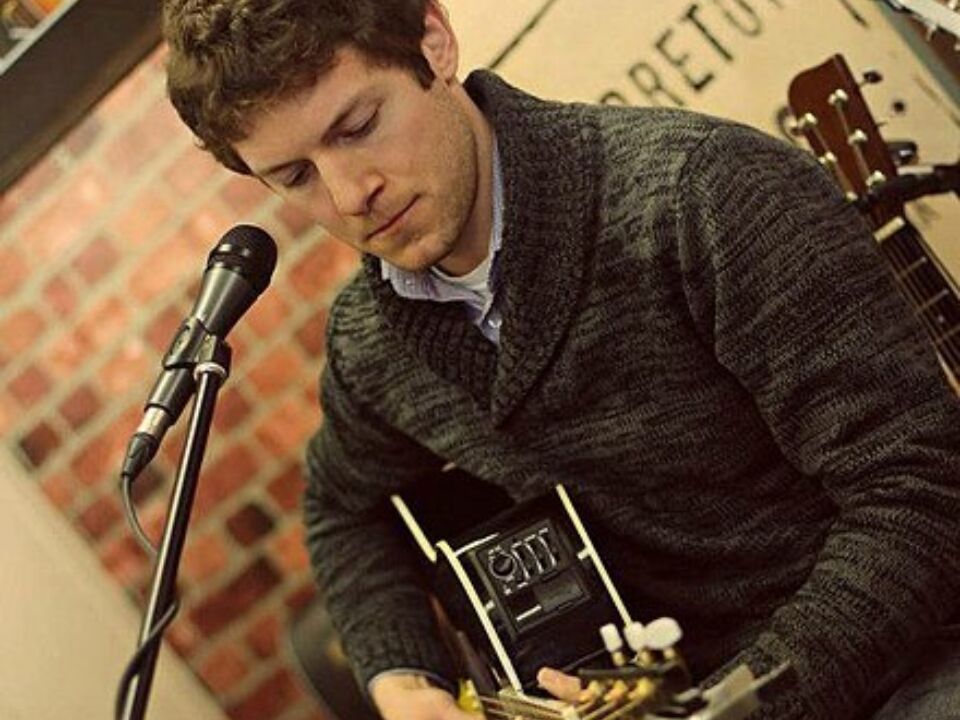
Actual Girl, a beautifully produced chapbook of 15 short, free-verse lyrics, is the latest offering from Nicholas Lea, a young Ottawa poet of considerable talent. The chapbook picks up where Lea’s first trade-length collection, Everything Is Movies (Chaudiere Books, 2007), leaves off, and in some ways Actual Girl exhibits improved craft. Like Everything Is Movies, the title Actual Girl announces one of Lea’s central preoccupations: the nature of reality and our very limited understanding of human motivations, interpersonal relationships, and our place in the universe. In other words, Lea explores issues of relevance to most readers, but what distinguishes him is the voice of humility and playfulness that he brings to such explorations. He is neither systematic nor dogmatic, but his poems remain enlightening.
In these explorations, Actual Girl thematizes the need to maintain a vital intellectual and spiritual/artistic experience in the face of a dehumanizing materialist culture. Namely, Lea questions whether one can maintain faith in art, spirituality, and personal relationships when, as the poem “Life’s Inane Gauntlet” puts it,It’s not so much a leap of faith as it is an automatic walk thru the new-smelling aisles, getting pummelled by novelty.Consumerism and the necessity to earn a living (“we lose ourselves in numbness / at our dumb jobs” [“The Clubbers”]) continually threaten our intellects and spirits, and Lea’s poems at times lament this seemingly unavoidable state of affairs. Are we reduced, as “Sphere of Influence” would have it, to “Honouring the accumulations, / handing over [our] senseless wallets”? Is there nothing more for us than toil in unrewarding jobs, chasing a bourgeois standard of happiness, a “Safe home, they say . . . between cars” (“A Practice”)? The collection does not offer any easy answer, but the development of Lea’s poems suggests an antidote to the barbiturate effects of modern life. The way to survive life’s inane gauntlet, the poems suggest, is partly a matter of attitude and partly a matter of attunement: we need an attitude of humility, humour, and curiosity; and this attitude encourages attunement to loved ones, art, and the natural environment. Lea’s poems convey this modesty and humour through bathetic tonal shifts and in plays on word sounds, inversions, and surprising word choices. A typical Lea poem alternates between a “high” tone and a conversational one, or what might be termed “poetic” and commonplace registers. Take, for example, “Precision Monsters”:
It appears we’re pristine. (Thank you, umbilical eternity). We’re cloud. Bared skin. Easy sin. Oh, and we’re becoming the Spring— dizzying new perspective.It’s almost as if Lea realized that with the line “We’re cloud. Bared skin.” the poem was veering into easy “poetic” language, and in order that the poem not take itself so seriously changed registers with a disarming, off-the-cuff “Oh.” This pattern occurs again in “Reading Phyllis Webb,” where the slang term “props” (as in “to give props to” a person or thing) undercuts a rather lofty passage about beauty. And again in “Hard Science,” the tone shifts rapidly in this passage: “Fuck the safe rut of the familiar— / in your still-wild province / (New Brunswick, uh huh), / the feminine rules.” Such shifts in tone often signal corresponding shifts in subject matter, generally from the artistic/spiritual to the mundane (see for example “Hard Science,” “Life’s Inane Gauntlet” and “Reading Phyllis Webb”). These rapid-fire tonal shifts are humourous, but not for the sake of empty laughs. Rather, such humour demonstrates humility at the service of the poet’s curiosity toward other people, the environment, and art. Indeed, one might note a parallel here to the work of Don McKay and Al Purdy. The poems in Actual Girl therefore implement and embody an attitude by which we can push back against the pressures of modern, urban life, pressures that can be overwhelmingly underwhelming. This attitude also encourages attunement to other people, art, and the environment, but though Lea’s poems constantly move towards connection with the Other, they teach the ultimate impossibility of complete connection. The collection’s opening poem, “A Practice,” puts the matter succinctly:
[tab15]cleverness[/tab15] that reduces . . . reaches the other by small, even smaller degrees. . . . . . . . . . . . . . . . . . . . . Us, pawing out at nothing but experiencing it as: something.We reach for the Other—be that a lover, friend, nature, or the Divine—but all the cleverness of philosophy, science, and art bring us no closer to perfect communion. The animalistic image of “pawing out” suggests the crudeness of the tools we use to connect with the Not-me. This poem could reasonably be read as nihilistic, but on the other hand, the final lines leave open the possibility of creating “something” of meaning in our lives, together with others (“us”). Yet, this process of reaching for the Other is never easy or complete. As the poem “Precision Monsters” puts it: “Never prescriptive, we wait / for that understandable / spirit—not waiting / exactly.” Lea’s poems suggest that though we sometimes lose faith and become impatient (“not waiting / exactly”), an openness grounded in modesty can ready us for such connections as are possible given our imperfections. The closing image of the collection’s final piece, “Welcome Poem,” furnishes a symbol for all of our connections to the Other: “We’ll listen to talk / radio in the dark.” We may be in the dark about the true nature of the Other, but we can listen, and remain open to what the Other might say. Actual Girl is a strong offering, in spite of a few passages that get mired in abstraction or lose focus in trite word play (see for example the opening lines of “Precision Monsters,” and the closing stanza of “Sphere of Influence”: “You’re-we’re-I’m / too impersonal, impressionable in the era, / too fluid”). Though it’s all too easy to assume maturation across a poet’s early books, this slim chapbook suggests growth in Lea’s abilities since Everything Is Movies. There are fewer verbal acrobatics for their own sake in Actual Girl, though Lea carries forward his hallmark unpretentiousness, humour, and exploratory poetics. There is an endearing sense of intimacy and honesty in the best of Lea’s work, without any sense of empty trendiness. Hopefully, Lea’s next full collection will further refine his technique while preserving his unique voice.
