

Author Notes: David Huebert
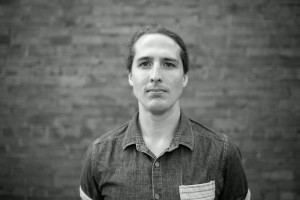 David Huebert, author of “Bellyflop”
“Bellyflop,” by David Huebert, appeared in The Puritan Issue 28. When The Town Crier asked David Huebert to tell us about the story’s background, he wrote this note on the magazine's editorial process, and the relationship he formed with Tyler Willis, one of The Puritan’s founding editors.
After submitting fiction and poetry to The Puritan for several years, I finally had a story accepted. There was a catch: among other editorial changes to my story “Bellyflop,” the magazine wanted an extensive overhaul of the ending. My main fear—and I think it’s a common anxiety among writers—was that whatever new ending I might produce would make the story worse.
I like to think of the story as a snake. With each draft, this textual creature leaves behind a now-superfluous layer of skin. Often it will have lost something dear to the writer, and usually that loss is for the best. The task of the writer—the handler responsible for allowing this organism to flourish—is to let go of that old skin and to coax the creature through the moulting process. At the beginning of a story’s life, the changes are particularly drastic. Characters leave, new ones appear. Entire sentences and paragraphs are cut. Beginnings and endings swap places. After a while, though, the process stabilizes. The writer can run through an edit or two with only minor changes. In my own practice, this is the point when the story is more or less ready to submit. Often, though, the writer can only take the story so far.I have never met Tyler Willis in person, though we exchanged over a dozen emails during February 2015. First we made large changes to “Bellyflop” and then we gradually refined smaller details until we more or less agreed on a finished entity. Although it can be difficult for a writer accustomed to solitary labour, working with an experienced, committed, and attentive editor like Tyler can furnish the ultimate reward: a story whose fibres have been probed and tested, a story whose flab has been lasered off. It can be a story in the best shape of its life.If “Bellyflop” was my pet iguana, Tyler Willis was a guy who said, “Hey, that iguana is pretty rad. Wouldn’t it be cool if we cut its tail off and watched it regenerate?”So, together, we did. We severed that tail and watched it grow back stronger.I wrote the new ending, the ending that appears in The Puritan 28, while soaring 30,000 feet above rivers, farms, and prairies between London, Ontario and Calgary, Alberta. I’d like to say I composed it while looking down over the embers of cities glowing in the darkness or gazing out on a vast dreamscape of sun-slicked cloud. In fact I wrote it with monitor-burned eyes, squinting in the dim cabin, wedged between two large, snoozing oil-patch workers. When the younger fellow from Liverpool, Nova Scotia woke up for his morning coffee, I was paranoid that he was reading the screen and thinking I got my kicks from publicly writing stories about vibrator-related adventures.I sent the new draft from the Calgary airport while waiting eight hours for my standby connection to Kelowna. The familiar fear plagued me all that night and the next day: what if this ending is making the story worse? When Tyler responded and said that he liked it, I knew intrinsically that he was right.So something else had happened. Not only had the story shed the biggest husk of all, I had developed a relationship with an editor I could now trust. Over the next few emails that we exchanged, we addressed smaller details of the story, but each change helped hone and refine the writing. Looking back over the various versions of “Bellyflop,” I see that many of the things I like most about the final version were not there in the original manuscript. True, I did have to fold Mrs. Barker, the obese guidance counselor, into Mr. Aucoin, vice principal. I also had to cut out a treasured reference to a “sack-moon,” something me and my foul Nova Scotian cronies often perpetrated in my youth. But I gained “Blue Velvet.” I gained Nancy reading thrillers in her backyard. I gained that primordial voice in the core of the tree. I gained my mother’s favourite part of the story: the “Aquafit angels.” Although I risk the cliché by doing so, I will say that these components were somehow part of the story all along: they simply needed to be teased out.I do not believe there is such thing as a finished story. Instead, I subscribe to that tired-but-true adage, “A manuscript is never finished; it is abandoned.” The published story is somewhat like a fossil—a calcified vestige of something that had once been much more recognizably alive. I’d like to think of myself and The Puritan’s editors as part of an archaeological team, carefully combing the earth to find the fossil that was always there.David Huebert is a PhD student at Western University. His poetry and fiction have appeared in journals such as Grain, Event, Vallum, Matrix, and The Dalhousie Review. A first book of poetry, We Are No Longer the Smart Kids in Class, will be published by Guernica Editions in fall 2015.