

BC Publishing Spotlight: Who Said I'm Not Vilified?
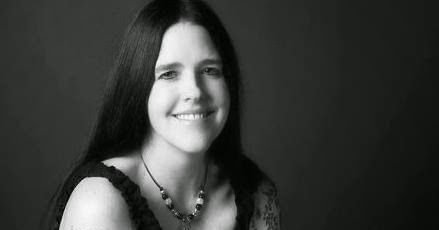 Catherine Owen is the author of ten collections of poetry.
An interview with poet and writer Catherine Owen
Over the next couple of months, the Town Crier will be featuring short interviews with Canadian authors published by BC publishers, conducted by BC publishing professionals. The fifth in the series is an interview with the Sunshine Coast’s Nathaniel G. Moore author of Jettison (Anvil Press) and Catherine Owen, author of several books including most recently, The Other 23 and a Half Hours: Or Everything You Wanted to Know That Your MFA Didn’t Teach You (Wolsak & Wynn) and the forthcoming collection of short fiction The Day of the Dead (Caitlin Press, 2016).
NATHANIEL G. MOORE: In a way, The Other 23 and a Half Hours: Or Everything You Wanted to Know That Your MFA Didn’t Teach You is a type of memoir, with of course a publishing filter set on it. Did you find yourself writing in a different way than say poetry or fiction and did you find this flow of writing easier or more difficult than those other genres?
CATHERINE OWEN: The compendium originally included little memoir until my publisher Noelle Allen suggested that my own experience in these practices was, of course, vital to incorporate and would be of interest to readers. I wouldn't say the process of composition was easier or more difficult, just different, as it involved so much research, interviewing, and time to collate the materials.
NGM: This book is as much collaboration as it is one writer’s journey. Were you surprised by the answers from your subjects as you put together the material? Were there any responses that truly shocked you?CO: I think what most surprised me, sadly, was the section on reviewing and how hard it was to get writers to speak of that process or even poets who reviewed at all. It seems a more controversial and highly charged practice than ever. I was happily surprised to find so many poets collaborating with artists in other disciplines and media and finding that it nourishes their primary poetic intents.NGM: You are an accomplished poet to say the least but still have a spoken word component (arts grant speak) to your work. What is your secret for not being exiled on some island for your acceptance of this most vilified genre.
My secret is that I don't care what people think.CO: Who says I'm not vilified? Or at least liminalized as a writer who refuses genre/medium/performative limitations. I have always believed all poetry should live on both page and stage. My secret is that I don't care what people think.
NGM: Your book is a sort of secret guide to the ins and outs of Canadian small press publishing. How would this book fare in an academic setting?
CO: Academia is notoriously self-conflicted. It desires leakages and fissures as hushed tunnels into deeper knowledge but when faced with these passageways it often backs up and dekes out of such alternate channels. I hope my secret guide will be found by those who ache for other ways of thinking about being a writer in the world. I never consider how my work will fare really as I know it will be located by those who really need it.NGM: What do you think people learn at MFA programs? I've witnessed some of the side effects of taking this program and liken it to readying a woman or man to fight in Afghanistan after watching an episode of Charles in Charge.
CO: Fascinating analogy! And perhaps it is that extreme if one considers poetry a kind of calling that has inherent risks and expansive contexts. MFA students possibly learn something about community editing processes and get a sense of “what is out there” in terms of magazines, presses, and jobs, but I think they miss much about history, form, and the necessarily subterranean trust required to create, not for any end per se, but because you are driven to this making and long for little else in your life, despite the obvious drawbacks. Poetry is not a career; it is a vocation. And thus doesn't, shouldn't, adhere to such institutionalized stepping stones.NGM: Do you take your own advice?
Poetry is not a career; it is a vocation. And thus doesn't, shouldn't, adhere to such institutionalized stepping stones.
CO: Everyday, as The Other 23 and a Half Hours makes clear. The only practice I haven't participated in myself is running a radio show. And my translation work has been mostly private. But I regularly write reviews and run series, for instance, as a means of gathering community and increasing articulation around the art form. It constantly fails as an ideal, but never as an aim.
NGM: In reading the chapter on starting your own press, I noticed mention of a Vancouver poet calendar. Could you speak about that briefly (I'm sure the Ontario authors would like to hear about this idea so they can rip it off—just kidding).
CO: My ex and I came up with the idea for the Hot Sonnet calendar after Patrik Jandak came to town and snapped my photo along with many other Vancouver poets. We selected, with his participation, 14 and received sonnets from each of them. We printed 100 and a part of the proceeds funded Al Purdy's A-frame house renovations. It was a unique and fun project, but undoubtedly costly!
NGM: You will be navigating into the world of short fiction soon. Can you reveal any secrets about this forthcoming book that I may reveal in this column coming out in a couple of months?
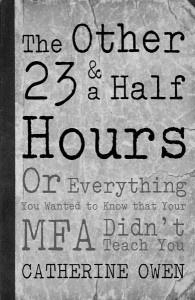 Catherine Owen's The Other 23 & a Half Hours (Wolsak & Wynn, 2015)
CO: My book of “sliver” and short fiction was written over the last ten years, in little stinging bits. There are about 36 short stories and sliver fictions, plus an homage to Marie-Claire Blais’ Three Travelers in Day of the Dead. These are in three sections: Men & Women, Muses, and The Dead. Some titles include: “Anthem” (Canadian-Mexican beach relations), “Breeders” (rabbit antagonisms in suburbia), “A brief guide to the Vocabulary of Captors” (Zeballos & cherry tomatoes), “Bobbles” (bobby socks & eternal friendship), and “Food I ate with Frank” (abandoned meals & overdoses). Rife with the secret life of the body and its torments and pleasures, The Day of the Dead is unashamed to say that it lives on multiple levels of existence and that there is no direct way of knowing another. The flesh and the mind engaged in a tickle fest in which there are laughs and also, discomfort of the sort that hopefully makes you want to skedaddle a little, then return.
Catherine Owen lives in New Westminster, BC. She is the author of ten collections of poetry, among them, Designated Mourner (ECW, 2014), Trobairitz (Anvil Press 2012), Seeing Lessons (Wolsak & Wynn 2010) and Frenzy (Anvil Press 2009). Her poems are included in several recent anthologies such as Forcefield: 77 Women Poets of BC (Mothertongue Press, 2013) and This Place a Stranger: Canadian Women Travelling Alone (Caitlin Press, 2014). Stories have appeared in Urban Graffiti, Memwear Magazine, Lit N Image (US) and Toronto Quarterly. Her collection of memoirs and essays is called Catalysts: Confrontations with the Muse (W & W, 2012). Frenzy won the Alberta Book Prize and other collections have been nominated for the BC Book Prize, ReLit, the CBC Prize, and the George Ryga Award. In 2015, Wolsak & Wynn published her compendium on the practices of writing called The Other 23 and a Half Hours or Everything You Wanted to Know That Your MFA Didn’t Teach You. She works in TV, plays metal bass and blogs at Marrow Reviews.
Caitlin Press was established in 1977 by Carolyn Zonailo as a feminist literary press. In the 1980s, Caitlin Press expanded its mandate to that of a BC literary press.
Cynthia Wilson and the late Ken Carling bought Caitlin Press in 1991 and moved the business to Prince George, quickly establishing themselves as the trade publisher of the Central Interior of British Columbia. During her fourteen years as publisher of Cailtin Press, Cynthia Wilson also stayed true to Zonailo’s original mandate, supporting and publishing a wide variety of BC women’s literature. In March 2008, Vici Johnstone of Halfmoon Bay purchased the press. Under her direction, Caitlin Press continues to publish books that reflect the diverse cultures, histories, and concerns of BC, bridging the gap between the urban and the rural. Caitlin also remains committed to its feminist origins by publishing bold works by and about BC women for a local and national readership. In 2015, Vici Johnstone and Caitlin Press received the Jim Douglas Award from the Association of Book Publishers of British Columbia. In 2016, Caitlin Press launched Dagger Editions, dedicated solely to publishing literary fiction, non-fiction and poetry by and about queer women (those who identify as queer women, including trans women, or include this in their personal history).
Caitlin Press publishes culturally significant books, including fiction, non-fiction (both historical and creative), and poetry. Occasionally we will produce a children’s or young adult title.
