

The Canadian Experience
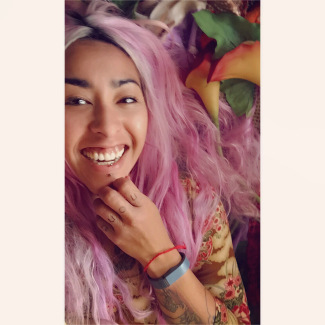 Jacqueline Valencia on the Canadian experience and whose stories CanLit tellsAs the fireworks lit up a celebratory sky on July 1, there was a great sense of pride for the place I was born and the place I’m privileged to live. However, Canada 150 left me a little uneasy. Maybe it’s because I’m older now and I am more awake than I have ever been that I find a giant disconnect with it all. The protests in Resistance 150 provoked something in me. The detachment has always been there, but there’s a feeling that I have repressed it all of my life. That day, conflicting emotions burned in my throat.My parents came to Toronto from Cali, Colombia in 1972. They arrived here, newly engaged, with a promise of a world full of opportunities they didn’t have in Colombia. My mother, a farm girl, was nervous getting out of the plane at Pearson airport and spent a long time trying to navigate the escalator. She had never been on one before and was afraid the steps would eat her up. She also experienced her first heavy snowfall that year and still stayed to marry my father soon after. I was born in the spring of 1973, as they were finishing up English as a second language courses. As they had come here with family who they socialized with, they didn’t get the chance to really practice their English as often as they would have liked. They were unassuming, quiet, but reliable manual labourers and learned more English at home with my kids’ television shows than with the outside world.When I started school, I had to learn the English language quickly. I would sometimes jumble up the Spanish of my childhood with the language I was learning in. It made for a few vocabulary mistakes at the dinner table, but Spanglish was a way to survive between my Canadian and Colombian worlds. And this is where I am caught. My parents’ story qualifies as an immigrant story, but I believe it is a very typically Canadian story. It’s a story a huge part of the population can identify with. I grew up in this country with different traditions than the ones displayed on Canadian television (i.e., the CBC).
These are white stories and while beautifully written, they are not the stories I relate to when I think of my life and the lives of the people around me.I have had maple syrup on an icicle at Pioneer Village, but I’ve never paddled a canoe. Poutine and ice-skating have never really been a part of my every day. I’m a city girl. Arepas con carne were my daily breakfast. Helping my mom figure out what the Portuguese butcher was saying was my afterschool chore, and helping my dad unload music crates full of Latin salsa music were a part of my norm. Latinos in Canada have a unique experience here, as do the Jamaicans, Indians, Chinese, Italians, Syrians, etc. Some of us had a roti way before we even thought of trying a beaver tail. For many of us, those “foreign foods” are a part of our Canadian experience. So how come we don’t often hear of these stories? Why is the story of the immigrant or the story of the “ethnic” Canadian still a part of a fantastical “other?”In the context of Canada 150 and the literature we hold high as Canadians, I think about the Canadian novels from school that first come to mind. It’s been a long time, but I remember The Edible Woman by Margaret Atwood, Anne of Green Gables by Lucy Maud Montgomery (my favourite), The Diviners by Margaret Laurence, and The Wars by Timothy Findley. These are white stories and while beautifully written, they are not the stories I relate to when I think of my life and the lives of the people around me. I think the only one that I identified to be as close to my kind of Canada in school was In The Skin Of A Lion by Michael Ondaatje, and that’s by a long stretch through time and cultures.Canada is a behemoth of a landmass. Our population is spread through vast provinces with their own varied lush and arid climates, colonial histories, and immigration experiences. It seems weird to pinpoint a couple of things as typically Canadian these days. Immigration and its descendants aren’t a great part of the canon in our education system and I believe this poses a problem for us as a nation. When I speak of popular Canadian literature, I expect to read stories I, or the people around me, identify with. These are stories of second, third, or fourth generation Canadians who grow up in contrasting cultures; of those living in densely populated tenement buildings in cities or the isolated landscapes of the reserves in the Prairies. We are people of colour and/or people who grew up with culture shocks and racism right in this country. There are a lot of us writing stories that come from this experience, but what is Canada still reading as their first typically Canadian stories? Is it the same tales of white wilderness in the snow after the wars where maple syrup flows and ice fishing accidents reign? Or are there stories we are neglecting in the name of keeping Canadian literature under a cohesive and colonized bubble?
Immigration and its descendants aren’t a great part of the canon in our education system and I believe this poses a problem for us as a nation.The canon stems in a large part from 150 years of a white colonizer’s experience that dismisses the much older indigenous history of this land and that of the people of colour who have lived here for generations within two divergent cultures. The fact that I only heard of the Black Nova Scotians this year boggles my mind. This is an extremely important Canadian history that I should have learned about in school. What else is missing from the academic syllabus in Canadian literature?There’s a common thread in all Canadians’ lives. It’s a struggle for identity despite provincial differences and the diverse ways we experience ever-evolving diasporas. This inner conflict is a distinctively Canadian thing and one I think we should be proud of. It helps us learn progressively, analyze our surroundings with keener eyes, and allows us to come to informed opinions about the world around us. In my time as a Writer in Residence I would like to posit some ideas, but also learn and provoke discussions about what is truly Canadian literature to you now as readers. Look around your environment to the people you interact with every day as well as to the people you don’t know. Are you reading their stories in the books you buy and things you learn in school? Are we lifting up their voices in the canon and in the national literary coterie of prize culture? What can CanLit change to be more accountable to the peoples that call this land home?
… what is Canada now in the words that I write and read?It is truly my belief that Canada can be united in an accurate representation of its populations by giving a platform to its unheard voices. In upcoming articles I hope to explore a bit of what I like in the diverse Canadian literature that already exists, but isn’t made popular. I would like to suggest ideas on how the CanLit canon can change to make it more engaging to its citizens and what we as a nation can do to support this change. I will also be asking questions from my fellow writers about how they have had to navigate the world of Canadian literature as writers struggling with racism and being caught between cultures in their everyday worlds.Canada isn’t post-colonial when it comes to literature and that is very important for me to note. While I often have had to debate the issues of conceptualism versus lyricism in my practice, I always default to that one issue that still nags at me every Canada Day: what is Canada now in the words that I write and read? I love our country and the literature it gave us. But is it willing to listen to us when our throats burn to reveal repressed expression and inequality?Jacqueline Valencia is a writer and critic. She is the author of There Is No Escape Out Of Time (Insomniac Press, 2016) and is the founding editor of These Girls On Film, a literary editor at The Rusty Toque, and staff film critic at Next Projection. Jacqueline is a board member of CWILA (Canadian Women In Literary Arts). Her column will appear every Monday for the month of July.
