

The Poetical is Political and the Books are Burning: Reviewing Adrienne Rich, Present Tense, and Speech Actions
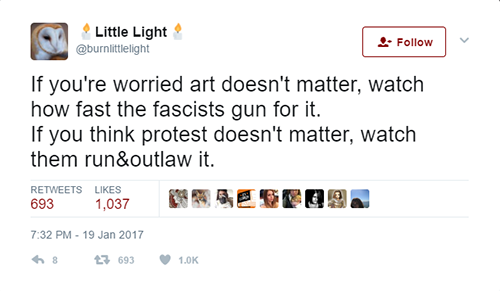
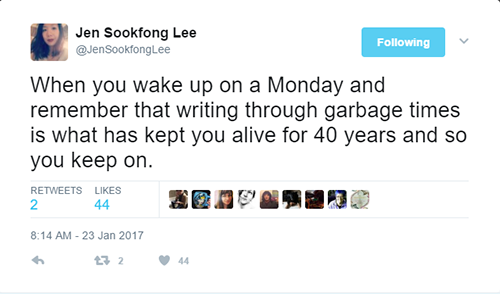
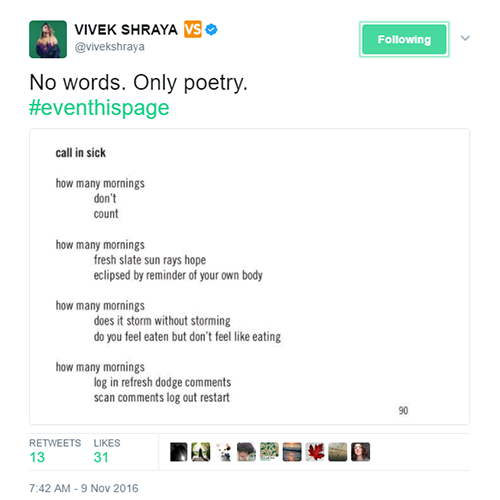
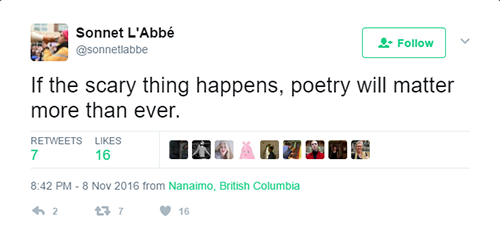 "... poetry can remind us of all we are in danger of losing ..."During the 2016 American election, I watched the results come in through a Twitter feed dominated by writers. It somehow felt more real to read reactions rather than the news itself, as if none of us were alone as we processed this ubiquitous confrontation with reality.Tony Kushner states in the preface to a reprinting of Angels in America, “I’m writing this introduction the day before America goes to the polls … This is the place from which it seems to me I’ve always written, perched on the knife’s edge of terror and hope.” In Lizzie Borden’s Born in Flames, a dissenting journalist says, “For at least some length of time, we have control of the language—we have control of describing ourselves.” In Adrienne Rich’s “The Burning of Paper Instead of Children,” she writes, “In America we only have the present tense. I am in danger. You are in danger.”Speaking to the title of her collection The Will to Change: Poems 1968-1970, Rich’s words in “The Burning of Paper Instead of Children” address language as a socially and politically fraught mode of expression and communication. Her poem responds to histories of systemic oppression, the Holocaust and the Vietnam War, and the terrors of nationalism—conflicts that are reproduced in our daily news. Horrifically uncanny, the urgency of this poem is preserved by the indistinction between eras, as a perpetual flood of violence denies historical distance.In a present tense that resonates so deeply with the terror of past decades, the notion of reviewing seems almost redundant. We are already still viewing. There is no past or future tense to the danger we inhabit. We are already still in this moment. Yet 27 years have passed since Kushner’s play was first performed, 34 since Borden’s film aired, and 49 since Rich’s poem was published. The echoing words of these writers can remind us of the vital role of art in resistance—and the ceaseless need for that resistance.
 Rich’s response to the question, “Does poetry play a role in social change?”:
Yes, where poetry is liberative language, connecting the fragments within us, connecting us to others like and unlike ourselves, replenishing our desire. It’s potentially catalytic speech because it’s more than speech: it is associative, metaphoric, dialectical, visual, musical; in poetry words can say more than they mean and mean more than they say. In a time of frontal assaults both on language and on human solidarity, poetry can remind us of all we are in danger of losing—disturb us, embolden us out of resignation.This statement articulates the empowering potential of poetry to provoke change through the performance of speech acts. Speech-act theory attests that all grammatical utterances are either constative (statements that can be judged for their validity) or performative (speech that enacts something). Through this capacity for action and potential to effect change, language has power.Decades earlier, Rich wrote “The Burning of Paper Instead of Children” and argued this power in language is controlled by the dominant social group. This poem presents language as an oppressive force, rather than liberative, and a force from which Rich seeks liberation.
an age of long silencerelieffrom this tongue this slab of limestoneor reinforced concretefanatics and tradersdumped on this coast wildgreen clayredthat breathed oncein signals of smokesweep of the windRich gestures to cave pictographs and smoke signals as modes of communication that aren’t necessarily pre-linguistic, but exist outside of the language she attempts to escape. Limestone and concrete, wildgreen clayred, provide an alternate means for communication that is pre-colonial, anti-patriarchal, and artistic. She sees an opportunity for relief from this tongue in a language that breathes not in the flames of books burning, but in smoke. Smoke becomes a form of non-verbal communication that offers an antonym, or perhaps an antidote, to the violence of language.
 But these modes of communication aren’t available to Rich, and ultimately, she returns to the problem of the language within which she is confined. This is the oppressor’s language, fraught with a history of violence that continues through the present moment. The oppressive power of language is inescapable. Love, filtered through language, is inevitably stained by the intrusion of violence. Rich struggles to navigate within the oppressor’s language, which mediates and manipulates the power in speech-as-action:
The burning of a book arouses no sensation in me. I know it hurts to burn. There are flames of napalm in Catonsville, Maryland. I know it hurts to burn. The typewriter is overheated, my mouth is burning. I cannot touch you and this is the oppressor’s language.Decades later, in the interview with which I began, Rich draws on the action inherent in performative speech acts, describing poetry’s potential to embolden us out of resignation and arguing that language has power in its potential to effect change. Speech-as-action becomes a medium for direct actions: leafleting, sit-ins, blockades, and other forms of non-violent civil disobedience, protest, and resistance. Rich asserts the place of poetry among these actions. In a recent essay in The New Yorker, Claudia Rankine writes:
Rich came of age in a postwar America where civil rights and antiwar movements were either getting started or were on the horizon. … She joined poets engaged in political-poetic resistance to the Vietnam War, as can be seen in ‘The Burning of Paper Instead of Children’ (1968), which includes lines like ‘Frederick Douglass wrote an English purer than Milton’s.’What Rankine calls political-poetic resistance and Rich calls liberative language are political speech acts, or what I conceive of as speech actions. Rich is unable to escape the oppressor’s language, but through speech actions she draws on the power of language to perform a political protest, burning the paper of that language instead.
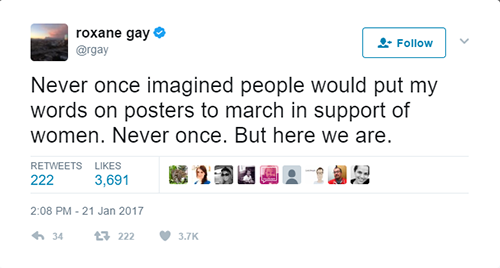 Half a century a century ago, Rich wrote for those caught in a crossfire that hasn’t yet ceased its burning. Half a century later, art reveals the resonance between supposedly distinct eras of danger, protest, and resistance. I write this review in the months following the inauguration, in a time of international marches, riots, and vigils, and in anticipation of the inevitable horrors that will appear in my Twitter feed before my words are published.Words matter more than ever. Language holds the power to oppress us and the power to remind us of all we are in danger of losing. To deny the poetry of resistance is an irreparable violence—a threat that makes urgent our incessant need to be heard, our unwavering refusal to be spoken over, silenced, denied. Now is the time to burn books and write our own.
