

The Hunt: A Conversation with Abdaljawad Omar On Palestine, Empire, and Anti-Imperial Possibility
In the imperial metropole, “resistance” has become at once ubiquitous and unspeakable. It is invoked to dignify nearly every gesture of dissent, while the organized and armed forms through which colonized peoples are fighting for liberation are subjected to both overt and subtle forms of moral quarantine, foreclosed from thought and foreclosing thought itself. Palestine has long crystallized this contradiction in the “West.” Palestine exposes the distance between solidarity as self-description and a praxis of material commitment; between a politics that recognizes Palestinians only in suffering and one that confronts Palestinian resistance as a force producing new horizons of thought, strategy, and material transformation.
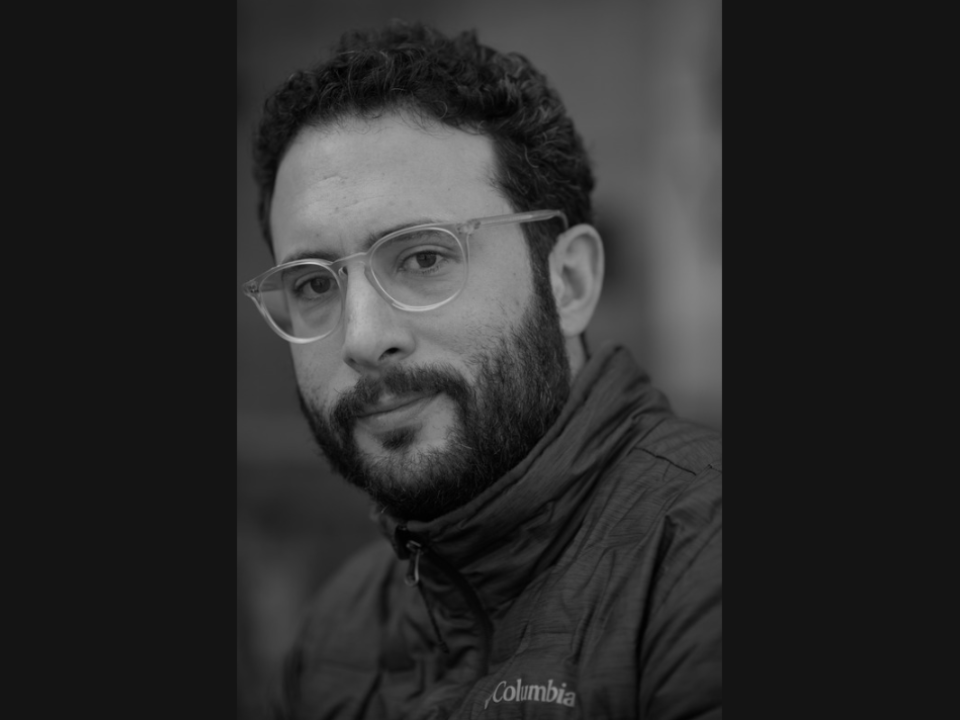
Abdaljawad Omar is a Palestinian writer and assistant professor in the Department of Philosophy and Cultural Studies at Birzeit University in Palestine. Writing across Arabic and English, his work is concerned with the history, thought, and practice of Palestinian resistance. He has been a leading voice concerned with thinking through the theoretical and political rupture of the Al-Aqsa Flood, from outside and against the structures of limitation that plague intellectual production in the metropole.
This conversation took place over email in the summer of 2026. In what follows, Omar moves across political and conceptual terrains: condemnation and recognition, the Palestinian militant-intellectual tradition, sacrifice and organization, geopolitics, and the changing horizons of anti-colonial struggle.
Yasir Piracha: Over one thousand days have passed since the launching of Ṭūfān al-Aqṣā, the Al-Aqsa Flood, on October 7, 2023. In that time, the entire world has been transformed by the Tufan and the ongoing genocide mounted in response. Palestine, Syria, Lebanon, Iran, the Gulf, even Europe and North America all seem to have been reshaped by the past 1000 days. While the legacy of the Tufan is still unfolding, it is clear that this legacy has many faces: geopolitical, military, discursive, subjective, cultural, material, theoretical.
Yet many have remained pathologically fixated on demanding that we “condemn” armed resistance, trying to establish condemnation as a kind of checkpoint for entry into “public” or “respectable” discursive space. Similarly, among academics, writers, artists, and cultural workers—save a few notable examples—there remains a profound inability to reckon with the Tufan and its aftermaths (at least in the English-language sphere). When armed resistance is addressed at all, it is denied the capacity to think, create, revise, or repeat. I am interested in what follows if we begin from the opposite premise: that resistance is not only an object for discourse, but a force that places thought under pressure. What demands has the Tufan made on thought itself? What kinds of theoretical habits, ethical reflexes, or political categories does it render inadequate? In other words, how might armed resistance condemn us?
Abdaljawad Omar: The reflex to condemn is almost pathological. When that condemnation arrives in the Global North, it emerges from a confluence of laziness, cowardice, and stupidity. From the vantage point of its destination, it operates to provide those refusing to engage with Palestine an easy way out—a form of radical withdrawal. At the level of its form, it is a refusal that masquerades as moral urgency. In this latter sense, condemnation arrives in the form of thinking—a form that is usually empty of content. By rehearsing the rituals of thinking, it appears complex, sophisticated, and full of reasoned arguments. But what it truly seeks is to foreclose any thinking of the Event—and here I mean the Tufan itself—to, in fact, kill the possibility of thought itself. These rehearsals—though I am uncertain whether they are truly rehearsals at all, or merely acts of simple parroting—operate across several sites. One of them is secular liberal sensibility: I mean that very discursive apparatus which insists on framing Palestine and its realities primarily through the language of calculable violations. This framework produces questions such as “What human rights violations has Israel committed in Gaza over the decades?” and “How can such violations be categorized, measured, and assigned their respective weight?”
The major limitation of this discourse is that it often recognizes Palestinians primarily through the category of the “victim.” In doing so, it reduces Palestinian historical subjectivity to a highly confined idiom—one that restricts our view and produces the Palestinian as the end recipient of pain, suffering, surveillance, complex technologies of pacification, human rights violations, de-development, ethnic cleansing, genocide, and much more. The voices of figures like Mehdi Hasan exemplify this perfectly, as do even the meticulous documentary renderings of someone like Norman Finkelstein. Yet these discourses are tethered to a moralism that, in part, requires both a distance from Palestine’s rich intellectual tradition and the neutralization of resistance as anything more than the scream of a “victim” seeking recognition—a desperation that has lost its moral sight. To view Palestine within these terms is to view it stripped of its capacity to think, to plan, and to constitute itself as a revolutionary subject that seeks to crack open the world. On some level, these discourses remain politically necessary given the nature of the censorship and exclusion that Palestinians have faced in the West. However, they remain insufficient.
The Palestinian demand, as you pose it in your question, is more complex and perhaps more primary. In fact, I do not think we can call it a demand at all. My reasons for hesitating are many. The idea of a demand presupposes a kind of transparency between intention and expression, whereas resistance articulates the possibility of articulation itself. It is true that content eventually attaches to this very appearance—that resistance folds within itself discourses, grievances, and political positions. But one should insist that resistance articulates the possibility of that content in the first place.
Having said this, I want to draw a further distinction, one that could drive our conversation forward. In psychoanalysis, a demand is inherently an appeal to the Other, a call for recognition that can be answered only by an authority external to the articulating subject; by definition, it is a relation structured by dependence. In Arabic, however, the word ṭalab is polysemous, meaning that it extends the field of the concept itself. It means demand, yes, but it also folds within it the idea of pursuit, the condition of seeking—of going after something. Palestine goes after and pursues the edifice of Western liberal and critical thought. In other words, it is engaged in the mechanics of hunting this thought down.
Palestinian resistance does not demand recognition from an authority—a big or small Other that also happens to be either the colonizer himself or the entire infrastructural and institutional complex supporting settler-colonialism in Palestine. On the one hand, it asserts organically what is already rightfully Palestinian: things like land, dignity, and the capacity to act freely. On the other hand, it seeks to expose the absurdity, stupidity, and cowardice of liberal positions—of a politics that is comfortable with the subjugation and total decimation of Palestinians so long as that the erasure remains relatively quiet.
Palestinian resistance does not demand recognition from an authority—a big or small Other that also happens to be either the colonizer himself or the entire infrastructural and institutional complex supporting settler-colonialism in Palestine.
This leaves us with something perhaps more radical: Palestine does not demand. To demand is to accept the entire architecture of the colonizer’s world. Palestinian resistances enact something altogether different and refuse to petition a world that has already been structured against it. It acts, from within its historic situation, and it acts freely without prior permission. In acting, Palestinian organized resistance performs something altogether different. It simply is. It acts. It thinks. It creates. It changes forms. It does not ask permission; it does not seek recognition. In acting, it seeks to move beyond the Master’s recognition, the Master’s economy, the Master’s words. It seeks to hunt down the very thought processes, the epistemological and political procedures and habits of thought that make this world possible, to expose the limits of this world to itself.
The hunter and the hunted is also a theme that runs through the histories of colonialism. The settler arrives as a hunter, and is in turn hunted. But the settler also arrives with an urge to gain acceptance, to legitimize the seizure of land, to force the native into exile or the grave—to erase what was, and at times to extract from the native a recognition of that ownership. Israel has taken this to another level, demanding from the Palestinian a recognition of its rightfulness, its Jewishness, and from the world a recognition of its theft. Recognize our theft of the West Bank, of the Golan Heights. It is obsessed with recognition.
The Palestinians simply do not require any outside power, any authority, or even the settler himself to recognize our relation to the land. It is rooted in thousands of years of presence. It is woven into the very fabric of life. Even when some of our leaders demand recognition of the Palestinian state, such political moves in the Global North are so alien to the Palestinian sense of belonging that they go unnoticed by Palestinians. There is an ease about such rightfulness that the settler never exhibits. So it is true that the settler arrives as a hunter. But he arrives as one issuing demands—to the metropole from which he came, and to the natives, whose death he requires but whose utterance of defeat he requires as well. When the Palestinian pursues, goes after the settler, it is not out of a desire to be recognized. It is a generative hunt, one that aims to deform the very edifice of settler power—its assumptions, its concepts, its economic and political hierarchies, its psychological make-up.
The hunt accomplishes many things at once. First is its ability to deform and dissolve the metropolitan subject’s inherited categories—in other words, its capacity to render defunct the language through which it thought itself. Second is the ability of such a hunt to unconceal what was already present but obscured by complex ideological and political operations: to clarify the truth of the political classes that govern large imperial states, to expose the pathologies of the colonizer’s world, and to display the violence on which it was built. In this sense, resistance forces the lie to be seen as a lie—the lie of the West’s own rationality, now exposed to itself. Third is the capacity to crack open an expansive horizon for what is politically possible—on the level of theory, language, and discourse, but more centrally on the level of thinking and working toward a new world. It does so by exposing that conditions of impossibility, such as the ones Palestinians face, only force the necessity of grappling with how to transform the impossible into the possible.
This is why Palestine does not demand anything from the metropole. To demand would be to keep the metropole as the reference point, as the wall against which Palestinians come to define and understand themselves. The hunt, however, operates on a different level. It says: your thought is limited, your world is pathological, your ideas furnish the very possibilities of violence, your economic realities are the product of exploitation and devastation, and your high theory remains inadequate, crippled by its self-obsession, and its narcissistic and self-referential view of the world.
Yasir Piracha: Your words remind me of Frantz Fanon’s “night of the absolute”—that radical negativity that is imbued within the colonized subject, a negativity capable of disintegrating the colonial order and opening unthought horizons, transforming the self and world through revolutionary action. This is, as you say, not a demand or call but simply the character of true anti-colonial resistance. It seems to me that perhaps the metropolitan subject detects, consciously or unconsciously, this revolutionary potential vibrating inside the Tufan, threatening his very coherence as a subject, and he thus tries to foreclose it from the symbolic order for the sake of self-preservation. You point out that even those in the metropole who dress themselves in the garb of radicality are often still wedded to the structures of liberalism that sustain their subjectivities. They may speak of Palestine, appropriating aesthetics of resistance while emptying it of its destructive and productive capacities. Perhaps they know that Palestine is on the hunt for them too—for the language, moral frameworks, institutions, and circuits of capital that sustain them.
Yet the sign “Palestine” signals a rich tradition of the revolutionary-writer, the comrade-poet, those who wield the pen as a rifle, the rifle as a pen, or both at once—Ghassan Kanafani, Wisam Rafeedie, Walid Daqqa, Nasser Abu Srour, Bassel al-Araj, to name just a few.
What can we learn from this ongoing tradition in the current moment, about the relationship between theory and practice? What does it mean to commit to the language and praxis of Palestine? What forms of self-annihilation, discipline, betrayal or fidelity are required for intellectual or cultural work to become something other than another avowal of the imperial world order?
Abdaljawad Omar: Recently I returned from a trip that was cordial in tone and reception, but also highly revealing. This is, to say the least, not the first of such encounters. You walk into a European city, you hold a talk, and the usual generosity of invitation and hospitality is extended. I found myself among scholars from across Europe, and I was shocked by how people paid to think and inquire displayed such a lack of curiosity. The hesitancy to engage was palpable and could be felt in the room; it was as if it were a protocol already signed on the door before entry. The talk itself was a conversation with a friend, who asked and probed with genuine curiosity—and when she was done, it was done. The rest of the meeting turned to the ‘serious’ business of what had brought them together in the first place. They sat, they listened, and then they turned with relief to the rest of the program. There might be different explanations—perhaps one of them is my limitations as a speaker. But to me there was something else also going on: the old arrogance and ever-expanding provincialism of a continent that mistakes itself for the world. The Palestinian always arrives as a case study, as a witness, furnishing testimony, but never as an interlocutor. It could also have been pity—that corrupted form of gaze which performs concern for Palestine while foreclosing the possibility of thinking with and through it. Pity manages to settle the accounts in advance. It is also hierarchical, in the sense that you pity only those less fortunate—a top-down sensation that labours quietly to leave me untouched and unchallenged. To challenge me would be to treat me as an equal.
Pity manages to settle the accounts in advance. It is also hierarchical, in the sense that you pity only those less fortunate—a top-down sensation that labours quietly to leave me untouched and unchallenged. To challenge me would be to treat me as an equal.
I offer this long detour simply to say that there are many ways in which Palestine attempts to break down the door, only to be refused entry: stupidity, pity, performativity, cowardice, incuriosity, and the threat Palestine poses by virtue of what it means to truly inhabit its truth. This touches on the very core of your question. In Palestine you have a longue durée struggle, over a century long, a recurring revolt with its ebbs and flows, with its accumulated pain and anger, with its successive defeats, confronting the impossible at every turn. A struggle of a people against the entire machinery of settler-colonialism, backed by Europe, Canada, Australia, and the larger world. In other words, you have an intellectual tradition born from the concentration and densification of many pressures at once. I have always been and remain tethered to the idea that there is no better place to think the world and its various contradictions than in Palestine.
In this very particular sense, Palestine is more than itself, and its intellectual—more precisely, its militant intellectual—tradition stands at the forefront of the possibilities for world-making and world-destroying. In this sense you are right to name Palestinian intellectuals, who write in altogether different registers and who are grappling with the impossibility of the Palestinian condition. They have much to teach about the relationship between word and deed. Wisam Rafeedie’s novella, for instance, is a phenomenology of fugitivity in the context of Palestine—a fugitivity he himself practiced for nine years. Bassel’s work and labor, and his killing at the hands of Israel, were both an intellectual event and a political one. The texts he produced in hiding, along with the ones that led him toward the horizon of taking concrete action in the world, and his refusal to settle the account with Israel on the level of words, are all indications of what it means when intellectuals take their analysis seriously. Ghassan Kanafani is a writer of existential choices, explicating those choices through an allegorical language drawn from the rich tradition of Palestinian storytelling. Nasser Abu Srour, Naji al-Ali, Mahmoud Darwish, Majed Abu Sharar, Fathi Shiqaqi, and numerous others have offered creative and political treatises—usually short, mostly coded, at times cryptic—texts that perform what they try to capture, but that most seriously come either as a result of capture or as an analysis that precedes the death of the intellectual. In Palestine the death of the author is more literal, and more aligned with what it means to analyze in the first place—in the sense that analysis is the perfection of action, intended and geared toward making the possible possible.
The second, and perhaps more central, concern emerged through my interactions with the “left” in the West: the insistence on foreclosing the logics of sacrifice—their dismissal as quaint and anti-political on the grounds of their embeddedness in either fascistic logics or, more broadly, religious movements. These critiques are not without value. But they surprise, and they surprise precisely because of the vocabulary this same left reaches for when it names its own condition: the age of monsters, the interregnum, the threat of annihilation, environmental catastrophe, economic inequality, AI and automation, the age of the post-human, the persistence of imperialism, empire, and settler-colonialism—a whole lexicon of emergency. Here is a left that has perfected the grammar of the apocalyptic, one that does not fail to announce the end of the world in every register, yet also recoils from the language and political grammar that has historically answered such quandaries: the language of organizational buildup, the language of “sacrifice”—the language of taking the language of struggle seriously. But perhaps the question that should be raised here is this: isn’t there a secret fear, a fear peculiar to this age, that the Euro-American subject is facing a crumbling order? And within this fear, is there not also a secret love—a love for the privilege that order bestowed upon this Metropolitan subject? The pleasure of critique without commitment; the possibility of moral grounding without any radical re-articulation of political futures and without the need for a resurgent politics. And isn’t it also, on some level, revelatory that the greatest lesson Palestine bestows is this: that despite living within an ongoing catastrophe, despite the fragmentation of Palestinian life, and despite the complex levers of control and exclusion, it has demonstrated the possibility of resistance precisely at the space-time of its impossibility?
I think one of the main problems remains this prevalent attitude of confining Palestine as an issue outside the frame of what Palestine also makes possible—Palestine, that is, as a matter of empathy or sympathy, or as a foreign policy problem: something that could be managed within a political program and not given the full force it both demands and yearns for. And this goes to the heart of your question around the intellectual-militant figures. There is much that could be learned, that could in fact produce meaningful concepts, understandings, and—more centrally—even forms of praxis. What is the Palestinian struggle if not a repeatedly defeated struggle that persists nonetheless? What is it if not a persistence within walls of impossibility, figurative and real? But also—what is it if not a diagnostic of the pathologies of ruling-class behaviour, an unconcealer of truths that reach far beyond Palestine?
And isn’t it also, on some level, revelatory that the greatest lesson Palestine bestows is this: that despite living within an ongoing catastrophe, despite the fragmentation of Palestinian life, and despite the complex levers of control and exclusion, it has demonstrated the possibility of resistance precisely at the space-time of its impossibility?
The boomerang, in the classical colonial rendition, tells the story of the return of practices initiated in the colony back to the metropole. This was Aimé Césaire’s thesis in Discourse on Colonialism, later taken up by Arendt as well—that the techniques of domination perfected in the periphery come back to haunt Europe itself. In these versions the boomerang returns as terror, and the colony is the metropole’s future. But the boomerang, precisely as a weapon, was never the exclusive domain of the master. What returns from the colony are also political futures, lessons about the possibility of struggle, idioms and concepts, truths that stare you in the face. What returns is more than the spectacle of the metropole facing the violence it enacted in the colony. In other words, if domination returns, if genocide finds a way to haunt the despised of Europe, if techniques and technologies of mass surveillance find their way back home—the revolutionary boomerang also names another trajectory, one that enunciates anti-colonial possibilities and opens a horizon for thinking the world otherwise.
Palestine offers different lessons. First, the demonstration that politics remains possible after defeat—that a people can be shattered, fragmented, walled in, and still generate strategy, thought, and persistence, not because they want to but because they have to. They generate it without the inflation of words. This is a boomerang that does not strike the metropole in the face but presses a question into its hands: the question of what it would mean to take one’s own apocalyptic vocabulary seriously. But it is also because of the sheer fact that Palestine returned to the politics of the metropole at the precise moment it is facing its own shadows—the insecurity attached to the rise of China, the reckoning with economic inequality, the crisis of stagnant wages, the proliferation of right-wing groups and ideologies, the coming to terms with environmental disaster created by the excess of capital. It returns first as a moral crisis. But if taken more seriously, it also becomes a political crisis—an accelerator for a new vision, for an urgent politics.
YP: It’s not hard to find those in Euro-America today who “speak up” for Palestine while demonizing every figure that materially supports the Palestinian struggle, such as the Axis of Resistance, figures in which intense political organization fuses with logics of sacrifice as well as discourses of martyrdom. The revolutionary boomerang seems to not yet have broken through this layer of ideology; it has not yet shattered the indulgence in colonial critique and moralizing. Here, the Euro-American pseudo-radical again reveals its allegiance to the imperial security apparatus: it can tolerate Palestine as victim, symbol, or moral accusation, but cannot tolerate Palestine as part of an organized front of anti-imperial confrontation.
Is this perhaps the real threat posed by the prospect of a “unity of fields”: that it both militarily threatens imperial interests, while also perhaps signalling a form of true alterity, a counter-world in which sacrifice and organization, mourning and fighting, rupture and continuity, gain new meanings? What does the current geopolitical conjuncture reveal about the changing horizons of anti-imperial possibility?
AO: There is an almost strange tendency in the Left more broadly. It is one where the Left, despite lacking in organization, in the capacity for world-making, and in the ability to effect political change, still insists on moralizing when it comes to forces that are attempting such a feat. Despite not offering a concrete alternative in the political landscape, it still insists on ejecting any forces marked by cultural difference from its view, engaging in sloppy equivocations and both-sidesisms. Here, of course, the figures of organizations such as Hamas, Hezbollah, and Iran loom large. In part this is due to the concerted propaganda campaigns that have made any near-objective analysis of these forces and their composition nearly impossible—an analysis attentive to their political directions, goals, and forms of struggle, but also to the many limitations they exhibit: their own forms of internal repression, their failures to create more inclusive political programs, and various social and economic contradictions. Instead of looking at the concrete struggle—its material gains and limitations, its opening of new horizons for action, its concrete call for a different global arrangement—this Left chooses at every turn to parrot the defunct propaganda of neo-conservatives and mainstream media.
In this sense, the people of the region are not waiting for the West to “save them.” They do not hinge their political wager on shifts in public opinion in Canada or the US, nor on the equivocations of the European liberals or conservatives. Throughout their history they have constructed discursive, political, economic, and ideological capacities to confront imperialism—to exhaust it, to menace it, to disrupt its operations, to hold it accountable. Consider the contemporary Iranian revolution and its aftermath. Here I am speaking to its foundational call, which folded into its ranks many leftist Iranian organizations, as well as those of a more religious sensibility. Its call for the ejection of imperial power from the region continues to exert force and remains a central node of anti-imperial possibility— one that resonated in the central geographic node of such a struggle, namely the eastern Mediterranean. In part it resonated because Palestinians, Lebanese, Syrians, and others were already engaged in these struggles; in part because of the historic cross-community relations that also define this region.
Within this context, the various political forces of the Axis of Resistance—across four decades of uneven evolution—were always in part working toward a unity of fields. The phrase names an aspiration before it names a military and political program. It names the aspiration to move beyond the modern and colonially constructed state-centric logics of the region. It also names the culprit behind the various struggles: that the fields are already united—Yemen, Palestine, Lebanon, Iraq, and more. It would be disingenuous, however, to speak of the complete success of such an aspiration. While it held promise, and in part operated over the past couple of years, it was also exposed in its limitations. The desire for self-preservation does kick in. State logic remains central, despite the aspiration and promise of the unity of fields, for reasons inherent to Israel and the wider military and political complex that backs it.
Yet even in its unevenness, and in the exposure of some of its limits, the anti-imperial struggle exceeds any of its single fronts. What has been revealed is the capacity to build technological and material alternatives—to fold together systems of production, communication, and armament that reject dependence on the imperial military-industrial complex. It has also revealed the capacity to disrupt Capital in creative and sustainable ways, through the exploitation of cheap technologies and geography. It struck the seam at the core of the colonizer’s psyche—unsettling his world, and forcing upon him the recognition that security remains contingent. It has demonstrated that, despite the large-scale targeting and killing of networks and leaders, resistance built for resilience can remain intact.
These and many others show that the struggle over a central geography in the flow of capital remains a contested and open question. The current conjuncture has forced questions into the open, such as: Does the US military have a future in the region? Can the region reformulate its power politics around a conception other than imperial patronage? Is Israel sustainable in its current form? Yes, these questions remain for now, but their very appearance in the political field tells us much about anti-imperial possibilities.
