

How Do We Fix The CanLit Canon
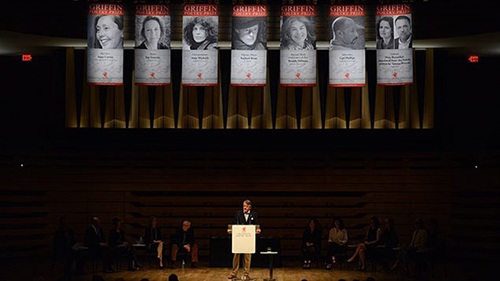 Griffin Poetry Prize ReadingsIt was only in the last few years that I heard of the term decolonization. Let’s tear down the establishment, remove the system that is holding back so many, and rebuild anew so that it is accountable to all is a fine cause. We hear decolonization in the speeches of protest and in written words calling out for change. The term is met with a lot of resistance. There are claims that by taking away what is already in the establishment, we would be dismissing what is important in our histories. In Canadian literature it gets very complicated. There is no sure definition of what qualifies as Canadian literature if we are still labelling certain works as “Canadian immigrant works,” “Indigenous peoples works,” or “Canadian Black works.” You can see the exclusion in literary events, prize galas, book lists, etc. It’s a majorly white world in Canadian literature. Things are changing, yes, but we need to try harder. We call a work Canadian literature if it is by a writer that calls Canada home; therefore, we need diversity that is reflective of our country’s inhabitants.So what are the solutions? I have none, but I’ve been mulling around a few things with folks on this matter. To create a literary culture that is relatable to Canadian readers and writers, the canon must change while still acknowledging what came before it. The caveat is to mention why the present canon exists the way it does. I believe that by shedding light on the importance of certain works we call Canadian today, we can also expose the flaws in the system. How did the Farley Mowats and Alice Monroes become our Canadian go-to writers? What were the systems that placed them in their exalted status? They are valuable writers, but why weren’t others, like Indigenous and immigrant writers, considered as worthy as they were? Question everything and investigate.I think the greatest source of power the literary world has always had is in the education system, particularly the elementary and high school syllabus. It would be progressive to see more writings by different people of colour and more immigrant stories in English classes. However, as a mother I am aware that there’s only so much time in the week to be given to class readings. I wonder if there is a way to create a class for grade school or a credited class for high school that would survey the make up of the classroom and teach different literary, artistic, and cultural histories reflective of the class. This would educate students about the variety of people that contribute to the Canadian identity, and in turn, would make many other students feel included in their curriculum. Those minds would grow up with an enriched knowledge of the unheard voices in their communities and would, I hope in the long run, help fix the lack of diversity in our literary canon.Then there is the role that publishers and literary organizers play in creating the canon. Publishing is the world where authors are made and introduced to the public readership. There’s power and privilege in that world. The influencers, their media presence, and their networks are the tools that keep literature relevant in a mass media world. Recently, I went to the Griffin Poetry Prize Readings. They were incredible and I was very happy to see some writers of colour acknowledged for their important works. During the intermission, my partner and I noticed that it was again, a mostly white room.
I think the greatest source of power the literary world has always had is in the education system …There are times where I try to gulp it down and just get on with enjoying the evening because everyone is there to celebrate poetry. But as writers of colour and those with varying stories of immigration, racism, oppression, and disenfranchisement set in Canada, it’s despairing to note that we are only represented in a handful of attendees at these events. That means we have very little authority as to what it means to write as a Canadian. That means, we are still regulated as the other.We can change that by hiring more people of colour, more people of varying backgrounds, and more people who are the pulse of modern literary movements. We can also make prize entries more accessible to people, like PRISM International has with their current prize entry model. We can open up our minds to experimental literatures or those we still consider the other. Slam and dub poetry is poetry and it’s about time we acknowledge the importance of it in our canon. Publishers, give us more of these poets!Editors also have a crucial duty to bring out the best in a writer. Canadian editors have the power to bring the best out of the stories by writers. When editing, consider the cultural backgrounds of your writers. They might be bringing an immigrant story the way they want it written. Consider keeping certain dialects or sayings in a writer’s work to make it more authentic for the writer and the reader. Editors of literary journals can also bring a lot more empathy (some might call this political correctness) into the current dialogues about what is Canadian literature and why the canon is what it is. By editing with empathy and a wider eye to the readership, we can start to form a dialogue conducive to openness and understanding. Don’t censor, but hold your writers accountable before publishing their works. If the tone of an article is racist or sexist, coming from a place of privilege in CanLit, say so or make the writer aware. Publishers, make yourself aware that controversies may create revenue, but at the same time, think of your readership. Who does that dollar serve, the oppressed or the oppressor? If it is the oppressor, then your publication isn’t progressive or edgy in any way. It’s toxic, because it hurts your writers and your readers. It stagnates Canadian literature.I’d like to hear more suggestions and solutions to this matter about how we can fix the CanLit canon, particularly anything to do with the education system. The Canadian population gets bigger and the stories from most of the people that call this land home are still mostly unheard. Walking into and out of literary events should always be interesting, but art shouldn’t be a place that welcomes only the privileged. In Canada, as in the rest of the world, art is by and for everyone.Jacqueline Valencia is a writer and critic. She is the author of There Is No Escape Out Of Time (Insomniac Press, 2016) and is the founding editor of These Girls On Film, a literary editor at The Rusty Toque, and staff film critic at Next Projection. Jacqueline is a board member of CWILA (Canadian Women In Literary Arts). Her column will appear every Monday for the month of July.
