

小作文
The sky glowed azure
above the field, still morning-wet. Daisies
rang along the sidewalk. Yellow petals guarded
pedestrians’ hearts, curling in the 留下 [stay]’s wind.
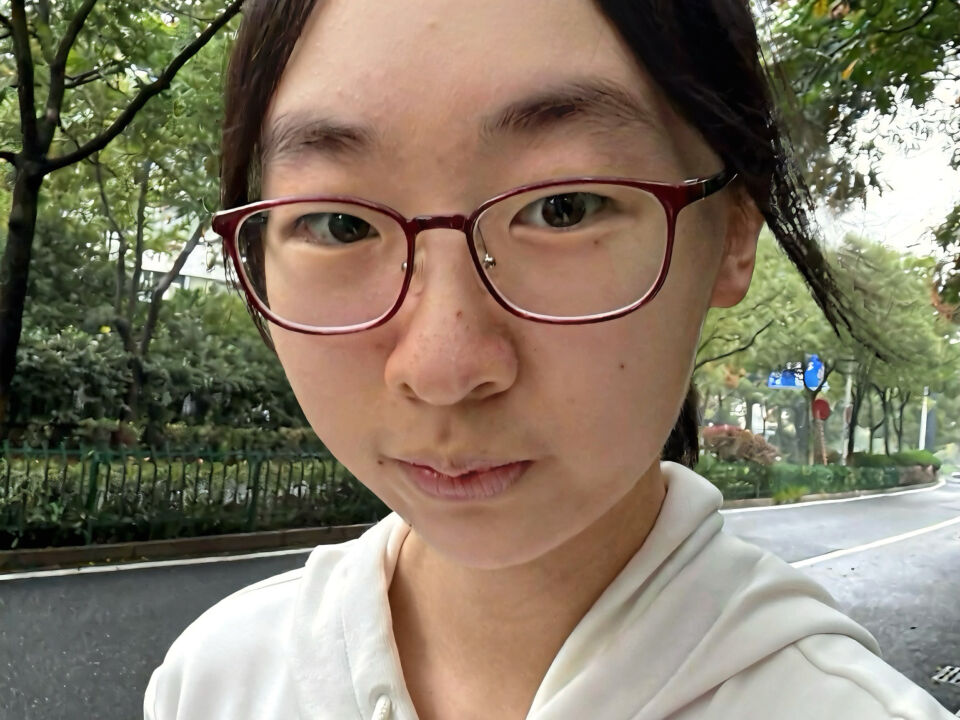
I took a picture so the future could prove the light
once fell like this. Exactly this way, each pixel
piecing together precise shards of what we remember:
the swollen sky, the clouds billowing & blood-
shot orange, not cliché until I said let’s go
to Shanghai & you laughed. I’m like
a dog & you’re the mother.
Why not reach for a city to name
the nameless drift between us. You knew it
before I did—so I said 光阴似箭,日月如梭 .
What’s so cliché about that? Waiting to resurface
months later, the answer unspools
through my phone’s camera roll as I scroll
through memories: its loftiness, your breath’s
little note between 箭 [arrow] & 梭 [shuttle], knowing
the punchline would soon scatter into shadows
across the pavement. Maybe it was the way
we wrote it—overwrote it—through elementary school
[小作文][Little Essay] until the last Chinese cicada shuttered.
In the background of those memories, the bench
still glows with the question you asked, how
to translate 光阴 [time] without sacrificing the swiftness & swagger
of departure. It’s still morning-wet, the daisies still
ringing the meaning’s light & shade along the sidewalk:
日’s [day’s] sun, 月’s [month’s] moon.
But time flew by like an arrow. Days slipped
through like a weaver’s shuttle. The translation
faded into the wrong light—into pixels, blurred by time.
