

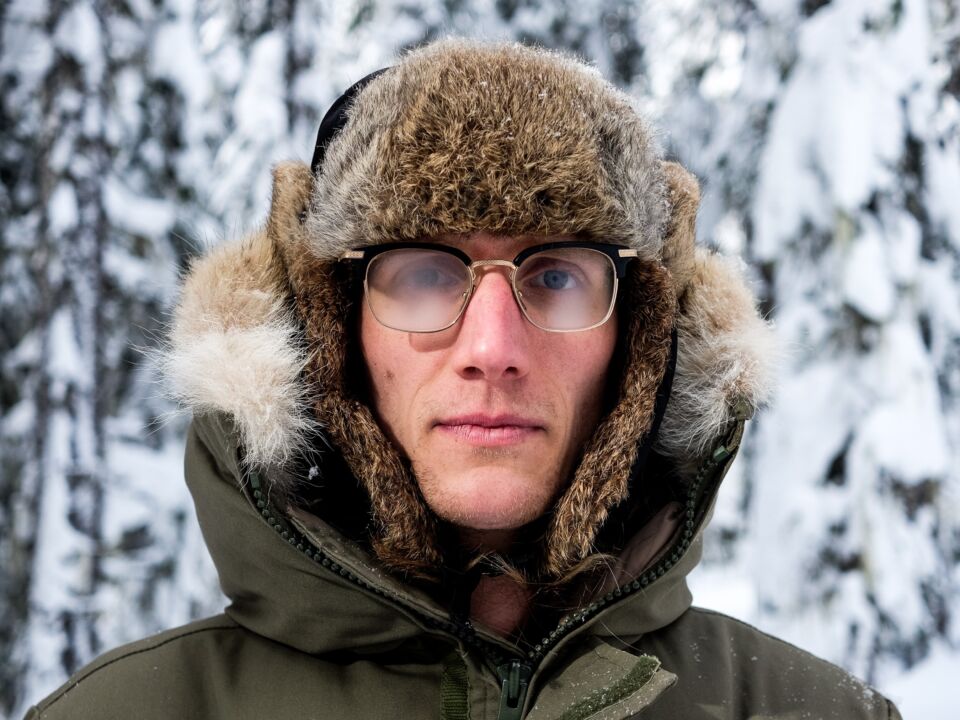
Memoir as Invitation: A Conversation with Richard Kelly Kemick
Richard Kelly Kemick’s memoir-in-essays, Decadence, wasn’t always going to be named as such. The value (and art) of memoir has always been in its invitation to hear another’s story, to see and understand their lived experience, which to me, seems like a decadent activity, despite literal definitions of the word orbiting decline or excess. There is a generosity, I feel, in peeking into a story—perhaps one we thought we knew about, say, a cultural moment, book, feeling, or sport—from someone else’s experience of it. Kemick’s knowledge of volleyball, for example, is buoyed by a genuine love of playing and watching the game. It’s a different vantage point of something one thought they knew but perhaps didn’t really know at all, because it’s through the writer’s eyes.
Decadence, which was published earlier this year by Biblioasis and is a finalist for the Hilary Weston Writers’ Trust Prize for Nonfiction by a Canadian, spans a decade of the writer’s life. Organized chronologically (with one year missing largely because of the birth of his child) and spanning a range of publications, including this one, the book reveals not only the growth of a man in his twenties into a father, but into a writerly self. Kemick sees this book as an opportunity to show a marked progression of his writing voice.
Kemick’s stories take us all over the place, including the Winchester Mystery House, impending fatherhood while his long-term relationship unravels, a miniature Christmas village, and a writer’s old briefcase. Each piece and phase of his life contains something I have felt, if not totally understood myself (i.e. heartbreak, friendship struggles, connection to a family home). I felt most drawn to the experiences in this collection that I hadn’t ever gone through before, and this is why we read memoirs: the remarkable is often quite ordinary.
Memoir is in an interesting, if sometimes disheartening, phase as a genre. Publishers and agents will tell you it’s harder to sell because not many readers are buying these books unless the person is mostly well-known. Substack writers, for example, get these deals, despite writing without editors or any editorial infrastructure, because they have an audience. Yet, a flood of takes or confessions or trend pieces piled on top of yet more trend pieces doesn’t make for a good memoir. It takes commitment to a story and, above all, good writing.
Partway through our conversation, Kemick became less of an interviewee and more of an interviewer, asking me my thoughts on writing, my own writing voice and approach to nonfiction, and why I do it at all. To be in a dialogue with another writer about the questions that come up privately was not just refreshing, but comforting, even affirming because there is a struggle, at times, to ask what the point of all of this is when it comes to sharing our lives. There is a sentiment in Kemick’s essay “The Kemick House” I keep coming back to as a thesis: “Who will remember what we loved? No one. That’s the point.” I think memoir is the point. It asks us to bear witness. We are asking you, the reader, to witness us and, perhaps, witness yourself. Somehow, decadence can mean both precious indulgence and degradation, and isn’t it something that bearing witness in a piece of memoir means we can see both at once?
Sarah MacDonald: How did you pick Decadence for the title of this collection?
Richard Kelly Kemick: I don't even know how I settled on it originally. I remember I had a few different titles, and then decadence had the word decade within it, even though the root—I don't think—is shared at all. It’s a compilation of ten years’ worth of writing, so I thought that was kind of fun. I always thought decadence was a good word. Like it's something you would use to describe a wonderful piece of cheesecake.
Sarah MacDonald: I think Galen Weston has done that.
Richard Kelly Kemick: Years ago, I saw that decadent actually has a much more negative connotation to it that it shares its root with decay, and so at the eleventh hour, I was worried about the book’s title. It occurred to me, like, “Richard, if you didn't know what the title meant, what makes you fucking think other people like will know what the why would you choose this?” I wanted to change the title to Jupiter Returns, which is like this… I don't know how into astrology you are.
SM: Very.
RKK: Okay, so I thought that was kind of cool, but then the editor flat out said absolutely not. There was no conversation to be had here. I was just stuck with Decadence.
SM: I have a writing mentor who also runs this collective called Morning Writing Club. She talks a lot about putting beautiful words or sentences into work that have no meaning whatsoever and they’re just there. I’m saying all of this because decadence could just be a really beautiful word to use and that’s it. Or maybe there is some kind of decadence in asking people to invest in your life by reading this collection. I wonder if you relate to that at all because it's a memoir, narrative nonfiction. Do you think it's decadent to ask someone to invest in your life in this way?
RKK: Oh wow, that's a great question. Yeah, I mean, it definitely seems indulgent. I haven't thought of it in that way but I definitely see what you're saying.
SM: It's a nice kind of invitation. It's not meant to be a tricky kind of question like, “Why do you think I should care about this?” Because I do. I love memoir. I do love you’re asking someone to be like a participant or a viewer of your life, of what happened to you. It's still a story, but there is something really lovely and, I think, decadent about that.
RKK: That's really nice to say. I mean, perhaps on that point, the idea of inviting someone I don't know to participate in this larger narrative of the book, very much came about accidentally. My original thought with the book was that I would compile ten years worth of magazine and radio writing that I'd done. I wasn’t until going through the pieces that I saw throughlines start to appear much more clearly. I didn't realize how much I referenced my friends like Peter and Alex throughout multiple pieces and the evolution of our relationship.
I've always really loved writing nonfiction. There’s a kind of fun in that it affords me, I would say at times, a more vivid life.
And then certainly the big one here would be my relationship with Litia, which I knew was present in a lot of pieces but I didn't necessarily anticipate the trajectory to be so prominent. I thought she was present in the same way in every piece, and it wasn't until I started putting the manuscript together that I saw that there was a bit more of a narrative arc to it. I think perhaps this idea of inviting the reader to witness this, that was never my intention when I was writing these pieces, but I leaned into that when I was assembling the pieces.
SM: You’ve written poetry and fiction before, so how did a memoir-in-essay collection like this come to be?
RKK: I've always really loved writing nonfiction. There’s a kind of fun in that it affords me, I would say at times, a more vivid life. The best memories I have of being a writer are almost always in relation to nonfiction, whether it's I like getting to interview someone, or getting access to something that I never would usually, or even just like interviewing my mother.
When I started realizing that at some point I might have enough for a manuscript, it was neat to revisit older pieces and see how I've changed as a writer since writing those original pieces. I cut the weaker stuff. I sent it to an editor I worked with before. He cut the stuff that he thought was weaker as well, and then we just kind of went from there.
SM: If you're looking at this snapshot of a decade, tell me a little bit about the ones that were omitted, and even what the process was like having to go back and read your work, especially the earlier stuff. I have such a weird relationship to that, so I'm curious.
RKK: How would you describe that relationship?
SM: Like encountering an old friend. Someone I love from afar but I’m not friends with them anymore. When I was writing more personal essays I was at VICE and a bit after, which is a very different environment. I love that person who wrote that, but I'm no longer that person. I'm glad she existed but she doesn’t now.
RKK: Seems like a healthy perspective.
SM: That’s thousands of dollars of therapy talking.
RKK: In the collection, something I wanted to maintain, or at least try to maintain, was the illusion of not just a narrative progression, but also a progression in style. Ideally, I became a slightly better writer over ten years of writing.
SM: That's brave, I think, to at least say that you want to show how you got better at this. I don't know if I would admit that.
RKK: I put the manuscript together years ago. If I were editing any piece, if I were editing to the degree that it changed the tone, style, or certainly the core of the piece, then I would scrap it. I wanted it to stand without major plastic surgery. I think that was my barometer.
Someone once told me—I do not know if what I'm about to say is true—that David Foster Wallace divided writing between when you're trying to convince the reader to love you and when you're trying to display your love of something to the reader. He says the latter is much better.
SM: What did you personally omit before your editor decided some pieces were weaker?
RKK: There was a piece about Litia and I living in our first apartment together that I remember vividly writing, and feeling quite happy with. There was an ease to it. But it just wasn't good. It was cloying. Someone once told me—I do not know if what I'm about to say is true—that David Foster Wallace divided writing between when you're trying to convince the reader to love you and when you're trying to display your love of something to the reader. He says the latter is much better. I don't know if he actually said this, but I believe it. And I feel with that earlier apartment piece, it was very much desperately trying to convince the reader to love me. It grates on the ear in many ways.
There was a piece I wrote about Marian Engels’ Bear. I reviewed it for Canadian Notes & Queries years ago, and originally had that in the collection, but I was kind of on the fence about it, and then John Metcalf, the editor, fucking hates that book, which I did not know. Yeah, he is not a fan. The reason I was on the fence was it seemed academic to me.
SM: Did the Bear piece lean toward that Foster Wallace-esque adage of trying to get the reader to love you?
RKK: This Bear essay veered back and forth. I wrote that piece while I was in school, and I think that was very much to its detriment, because there were these swaths of other parts of the essay that were insecure in the worst way possible. An insecurity that borders on vanity or posturing.
SM: That’s a rite of passage, I think. I'm not saying I saw this in in any of these essays, but there's a sense of like, “Oh, I'm a writer, I'm fucking legit,” and you're like just writing for your school paper. I don't think people who are primarily digital writers truly get this addictive quality to seeing your name and your words in print. At least for me, that affected a lot of my writing. What was I even trying to say? Do I actually have a point of view on this thing, or am I doing it just because of the allure of getting to be in print?
RKK: Right? Okay, but let me ask you a question that has not occurred to me until just right now. When you read your old stuff, do you see a difference in quality when that piece has been solicited ahead of time, rather than if you're just writing and hoping to have it land somewhere later?
SM: Yes, absolutely.
RKK: I feel like I do, too. Maybe now in hindsight.
SM: There's something a bit more serious in being solicited. I will say it depended on the editor. I became a better writer because I had better editors. The Walrus especially. I've never been fact-checked more in my life. I've spent like a year on an essay once and to have that thoroughness, I think, it’s the guardrails of that experience. I wouldn't try and sneak a “look at me,” you know? I'm very effusive. I can be too effusive and it will show up in my writing. Good editors catch that.
The big difference there is that you're working with an editor early on and so you know what they want, right? So you're kind of already getting out of your own way, maybe.
RKK: Right, that makes sense.
SM: It's hard interviewing someone else who's also a journalist.
RKK: It just occurred to me that, of course, it would be almost impossible for there not to be a difference, perhaps in quality, but at least in outcome between pieces that are solicited and pieces that are slush piled.
SM: Being a writer is a fun trip all the way around. I really appreciated the essay “The Briefcase.” It was heartbreaking. There are so, so many moments when I'm like, “Why do I do this?” I'm ready to give up. There's so much noise. Then there’s this person with all of these little piles of writing over four decades. But that’s just it. That’s why someone writes. The investment of it. Do you ask yourself after writing why you do it?
When I decided to try and be a writer the way I constructed my professional life was with that in mind—“I'm just going all in.”
RKK: Yes, especially in the past couple months. Usually, the way I work is I have a large project that I'm working on, and then smaller projects that are kind of dotting throughout. But in March, both a large project and then two smaller projects ended at the same time, and I hadn't started anything else. It's really the first time in my writerly life that that coincidence of completion has happened. I remember thinking this is the time to walk away.
A good friend of mine, Alex, who's in the book, has quit acting altogether, and I was telling him I was feeling this way of walking away from writing. It's really the only time he's given me categorical advice in my life. He just said, “Don't fucking do it. Don't do it.”
David Sedaris’s big piece of advice to aspiring writers is to not have a fallback plan–if you have a fallback plan, you will fall back. It's impossible to resist the allure of having, I don't know, an accountant degree, whatever the fuck that's called, just sitting off to the side. When I decided to try and be a writer the way I constructed my professional life was with that in mind—“I'm just going all in.” But now I do feel straitjacketed within it in a way, not just in the sense of like, I have no other skill, but also, how would I spend my time?
SM: I really loved that this collection started with the miniature Christmas village. There are real worlds built in these pieces. I wonder what kind of opportunities you think we have to still invest in this type of writing, in that type of world building?
RKK: I remember Fred Stenson once told me that writing itself is always being brought into hospice. It's always just about to die, but still finds a way to live. In my professional life, the Banff Center is a huge benefit I've had, especially speaking about nonfiction. I did the literary journalism program there years ago. It's where the Christmas village story was written. I feel like there are certainly fewer and fewer bastions like this—there are fewer places that foster writing, or such pure places that develop good writing.
I got so much as a writer—like self worth—from this literary journalism program. There's this illusion of professionalism that you're swathed in while you're there, and it's so affirming once you're done to go out and carry that on in some ways. That's really valuable, and becoming more difficult to find–at the same time there are places, like this publication, that insist on sticking around.
