ON NO
a performance in two videos and a conversation.
Explore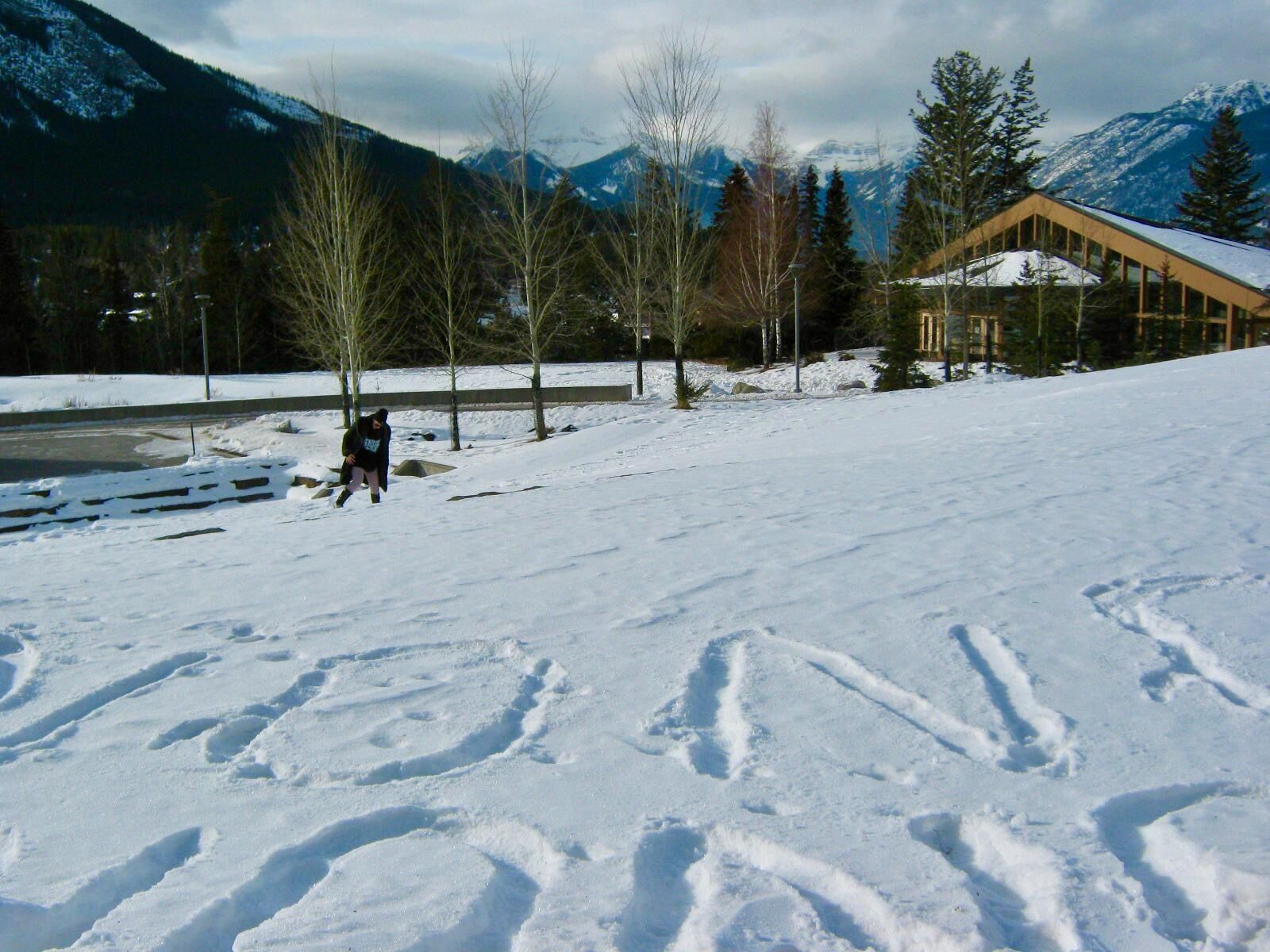
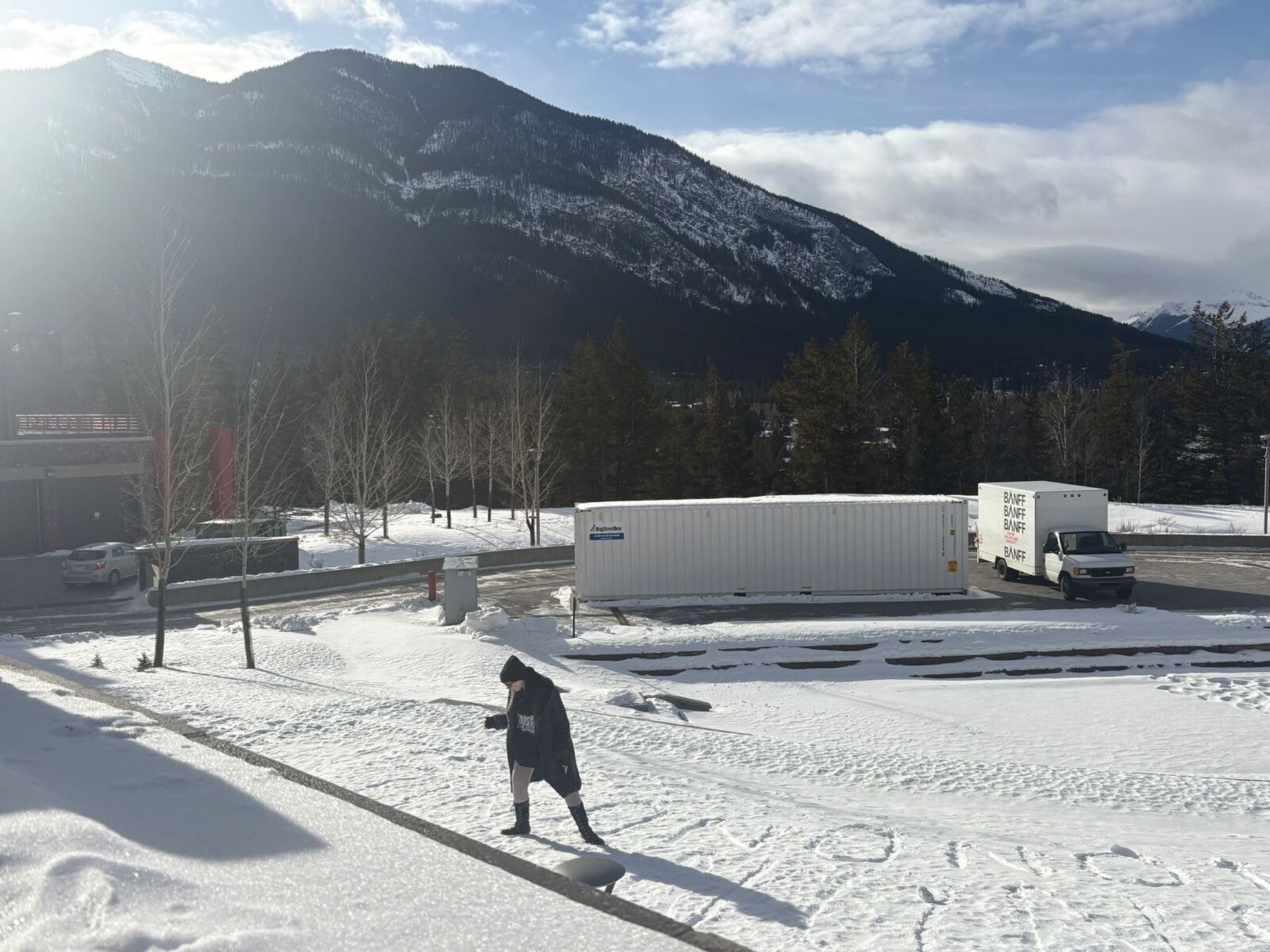
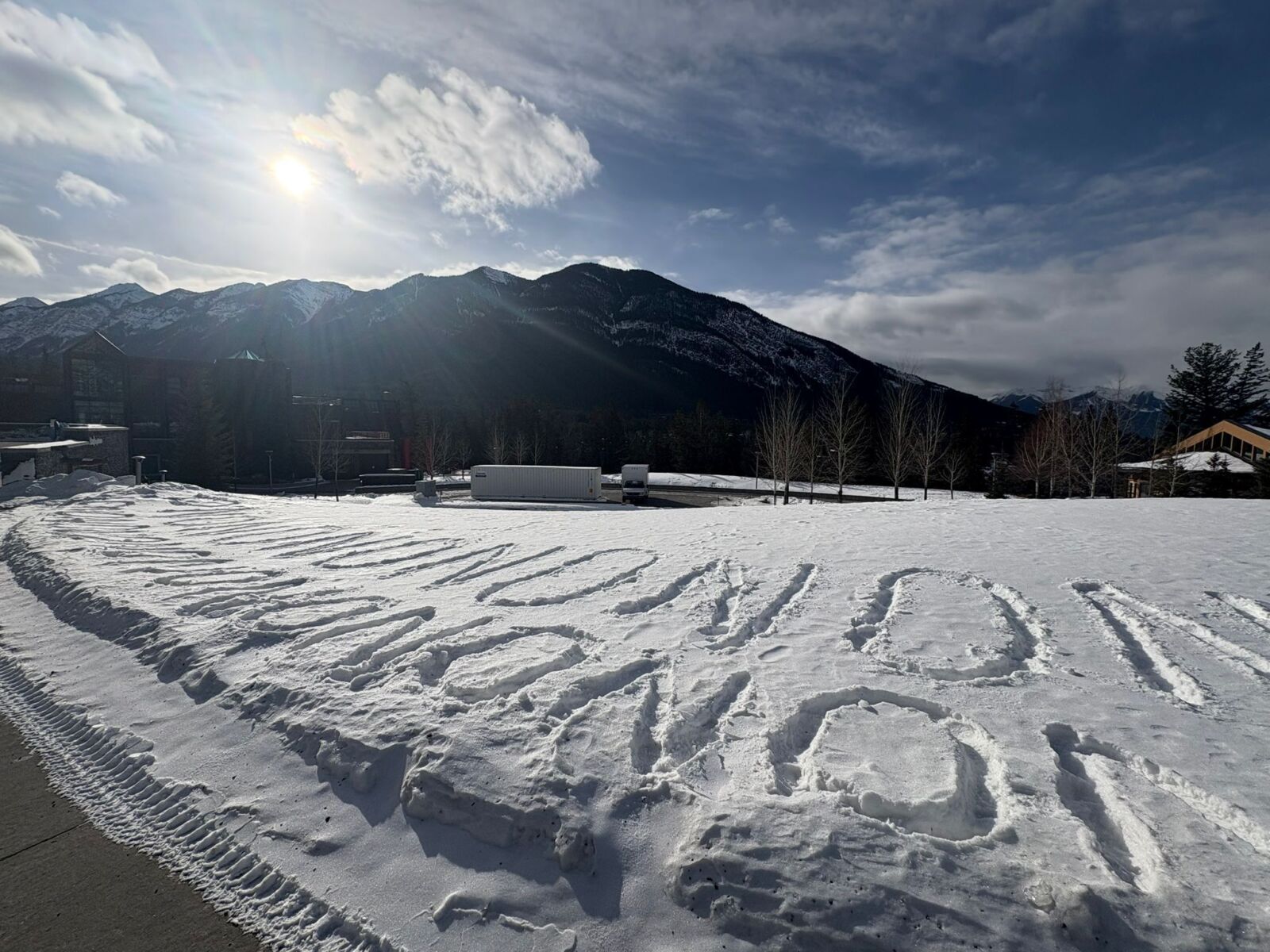
At the Banff Centre’s ‘Deep Winter Writers’ residency this January, I began to recognize the landscape as a page. I had things to say and I knew I needed to say them, somehow, with my whole body.
If the assaults I was writing about during this time had been inflicted on my whole body, then how could I be expected to write only with my hand. The page had become insufficient.
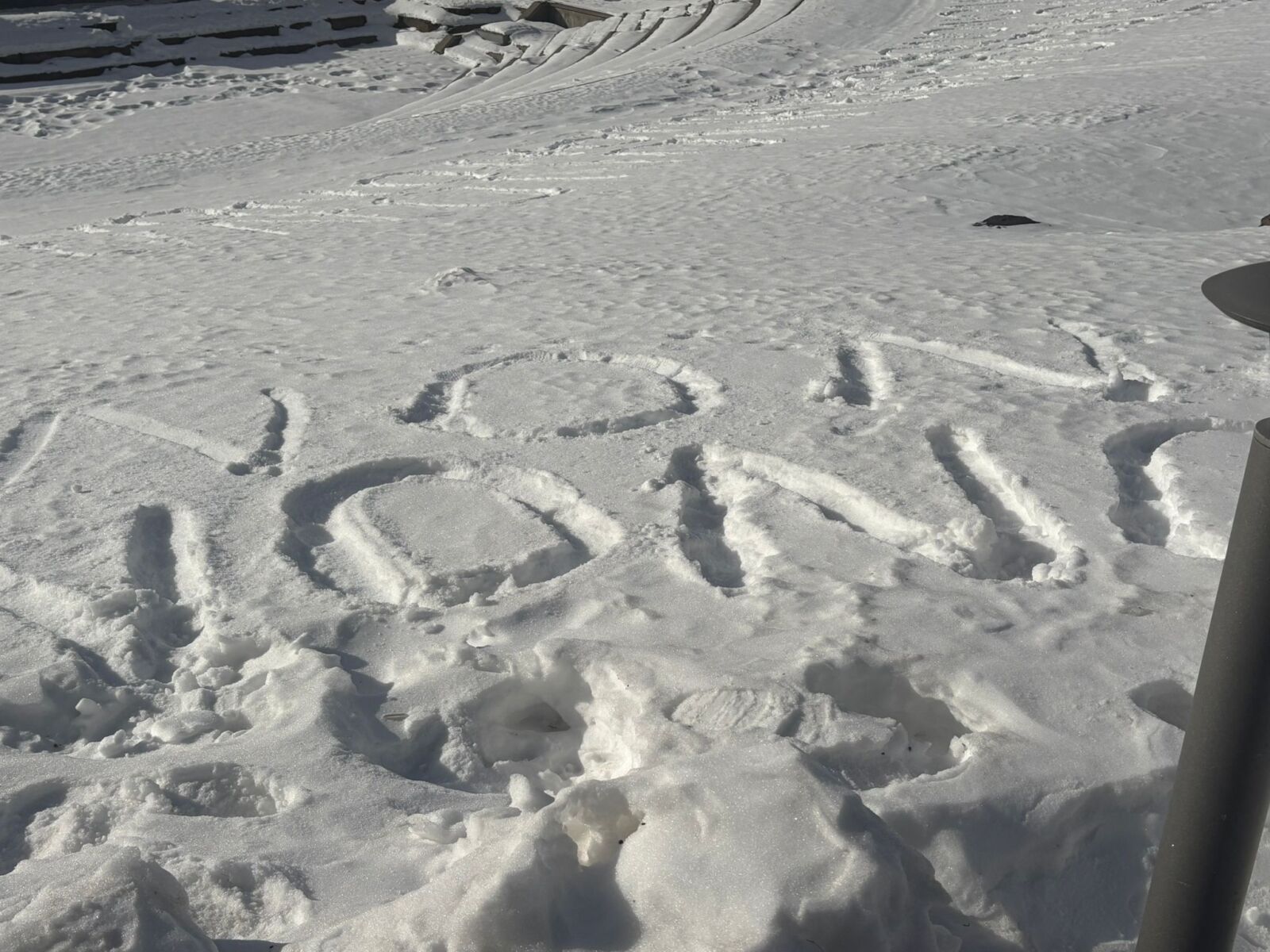
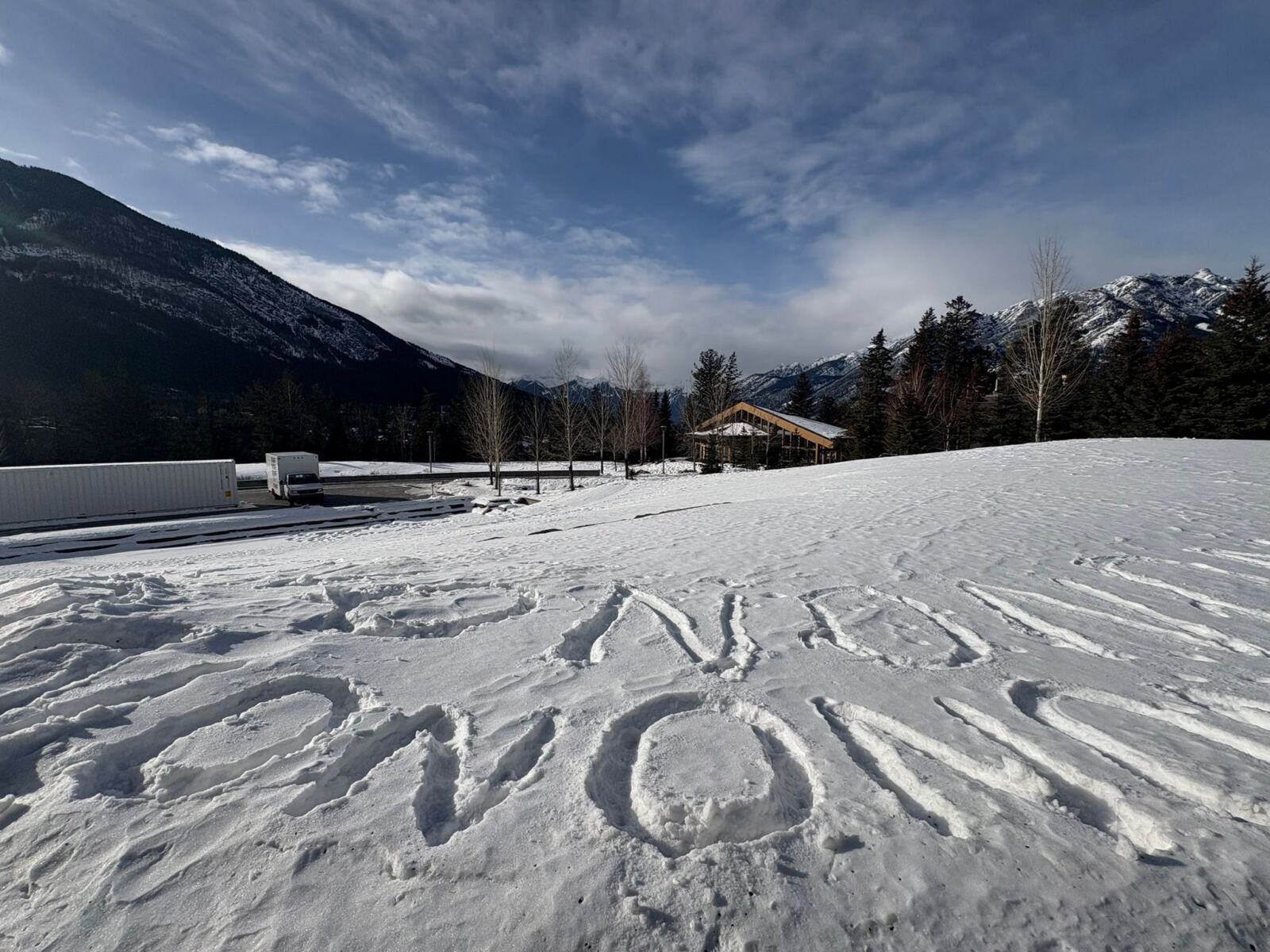
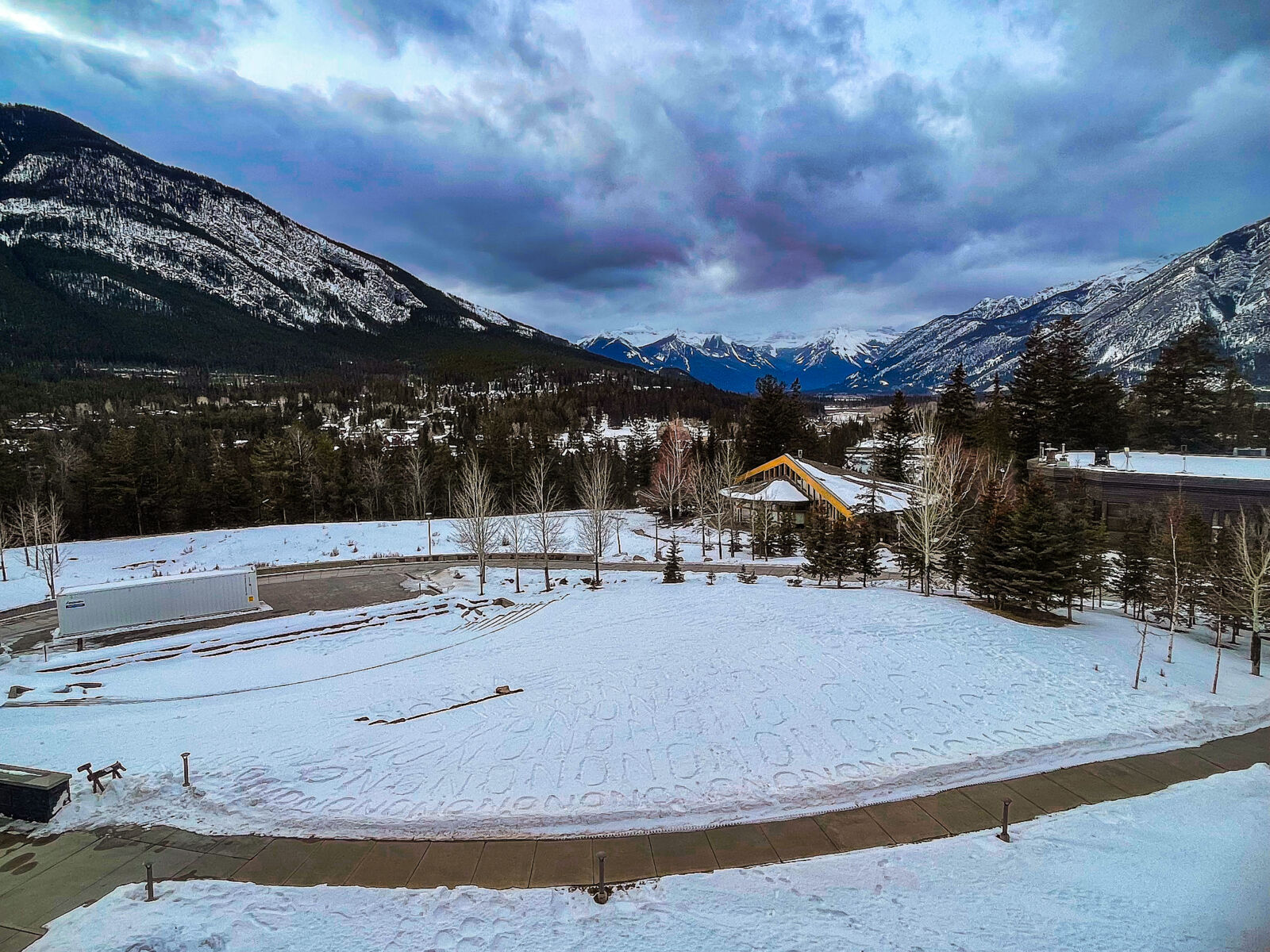
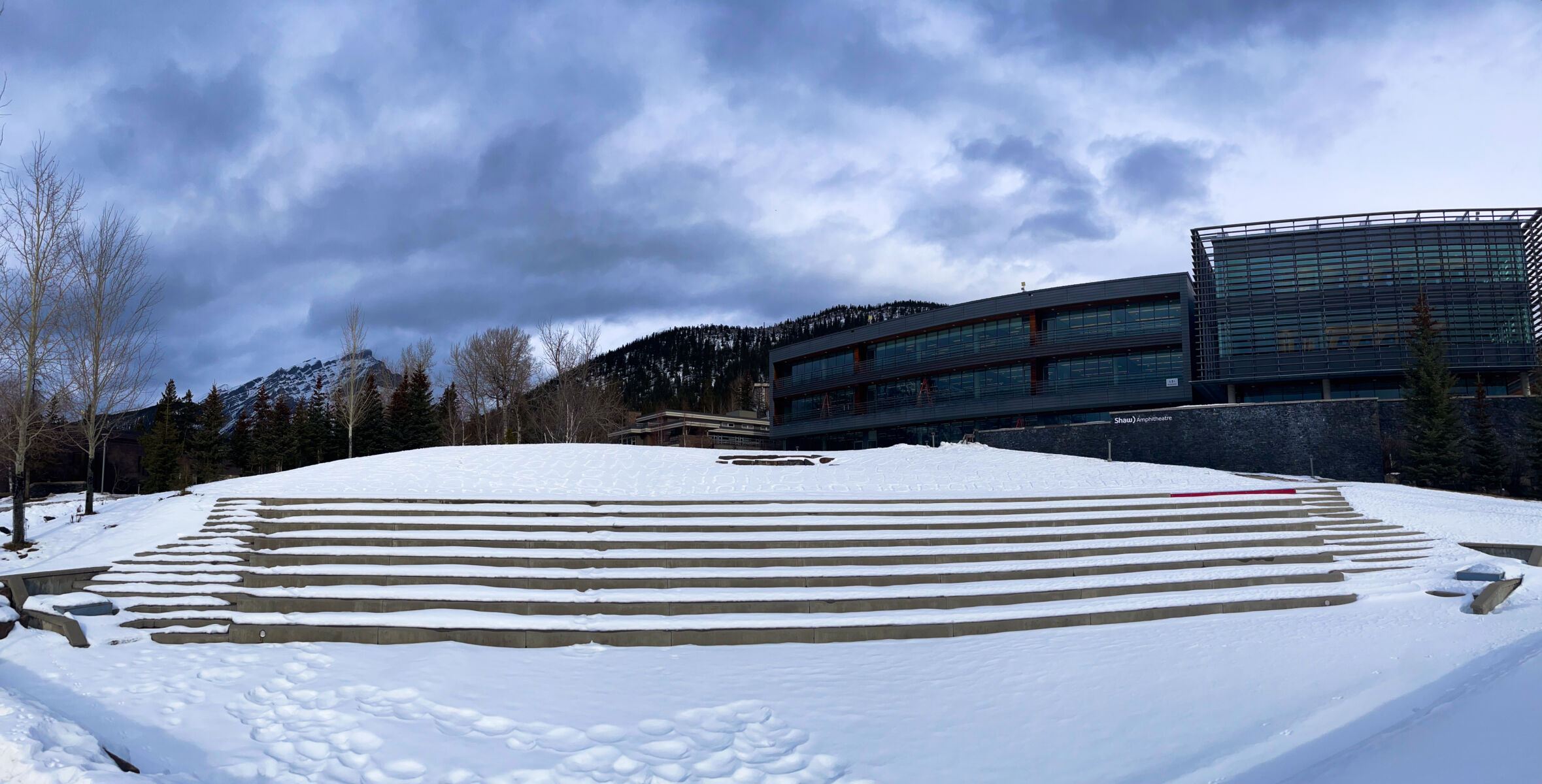
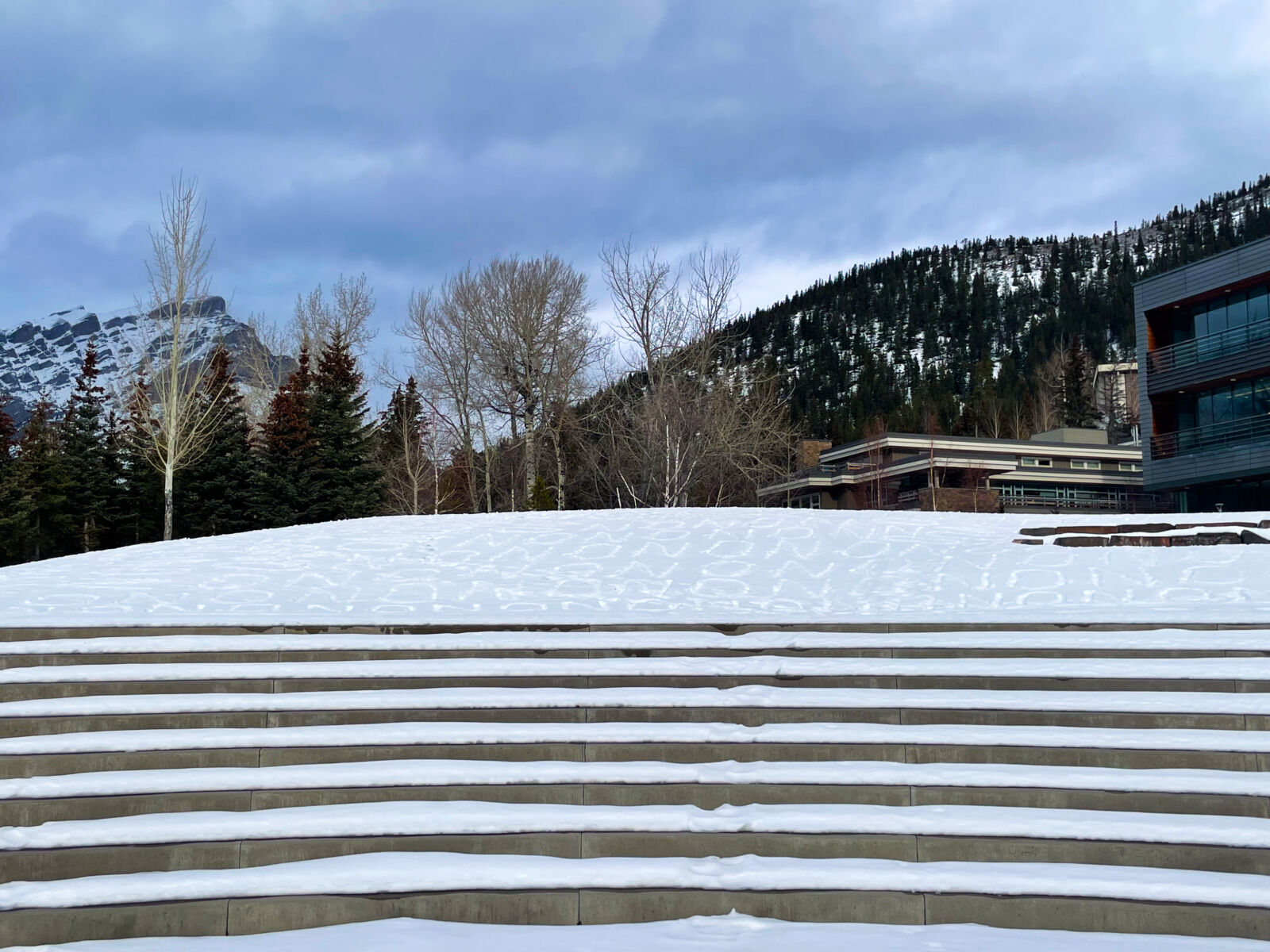
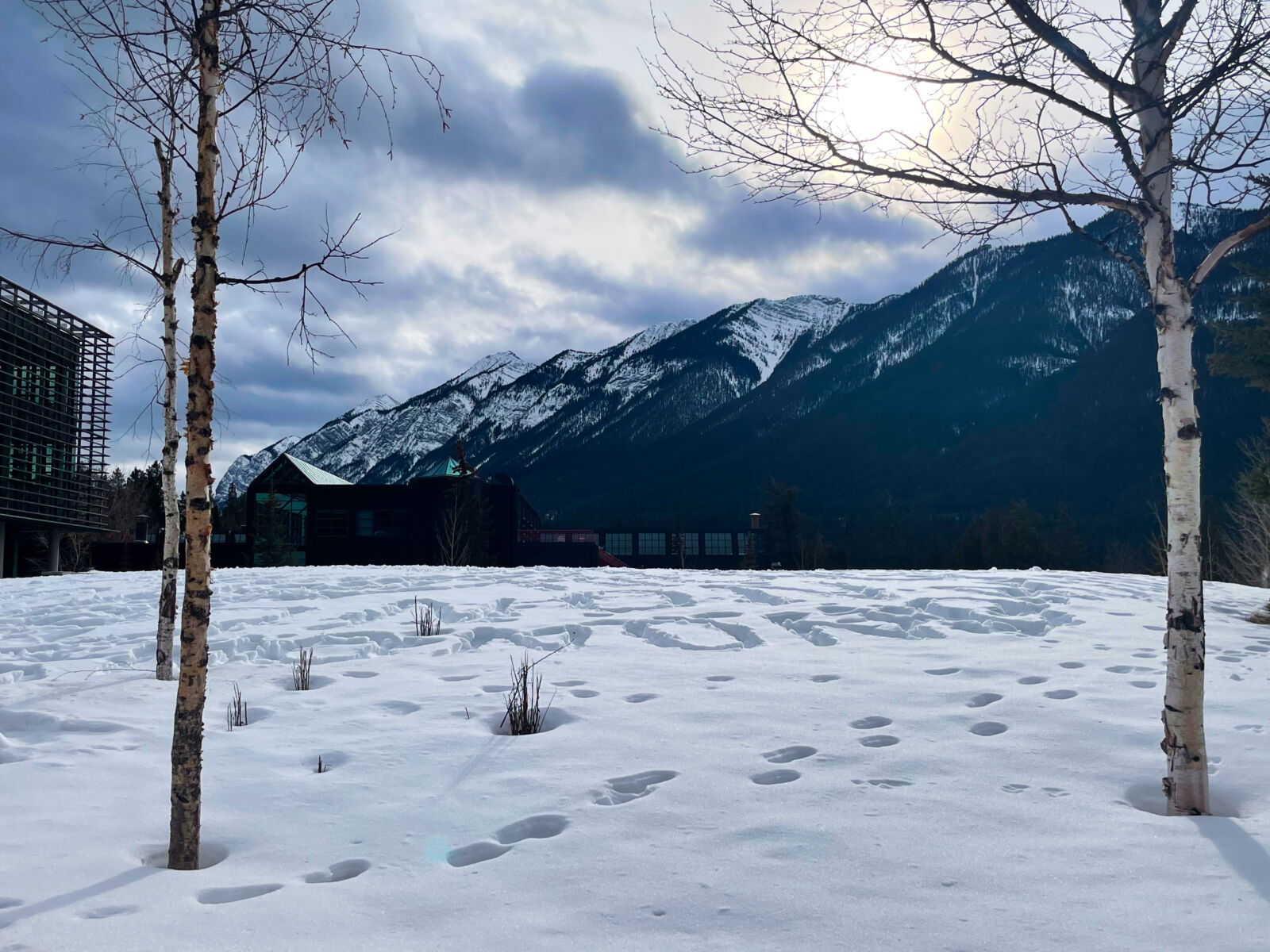
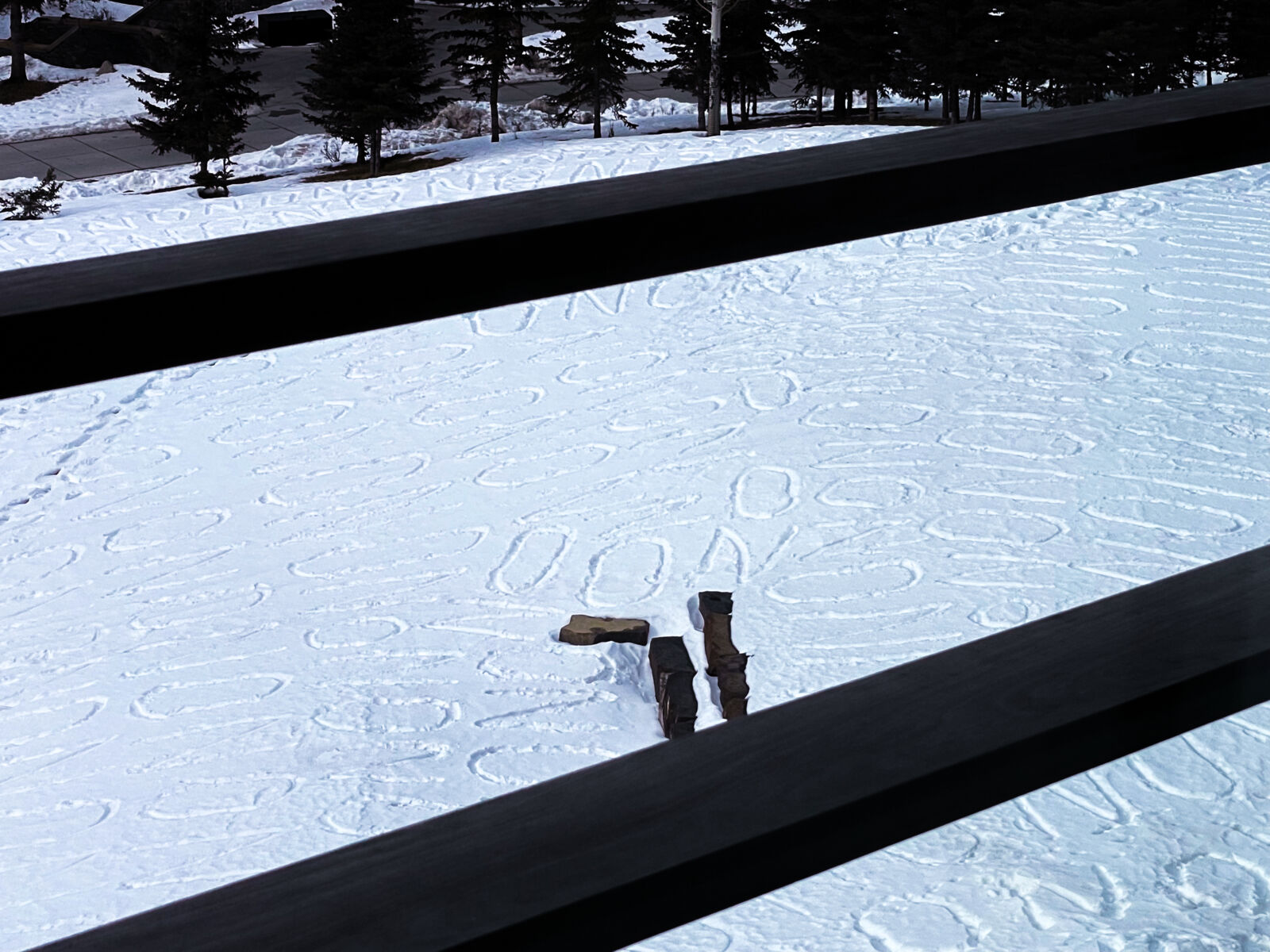
Throughout a four-hour live performance on the afternoon of January 29, 2026, I filled a huge field with the word NO (or the word NON, or the words which go ON and ON and ON) by stomping these letters into the snow. At the end, my friend Dave showed up to ruin everything I had created.
I thought about the effort it takes to attempt to protect oneself, the hours of labour and the hours or failure. I thought about the dedication it takes to labour over something which you know will be destroyed. I realized that pointlessness was the point. I thought about throwing my body onto the spiked altar that is the fallacy of safety. I realized that nothing I do will ever be able to protect me from harm.
I found an entry point, or a method, or I found a process for enduring. I said what I needed to say.
Or I tried and failed and that failure was sufficient.
“even when the snow is gone, it's not gone”: Jessica Bebenek & Dave Drayton in Conversation
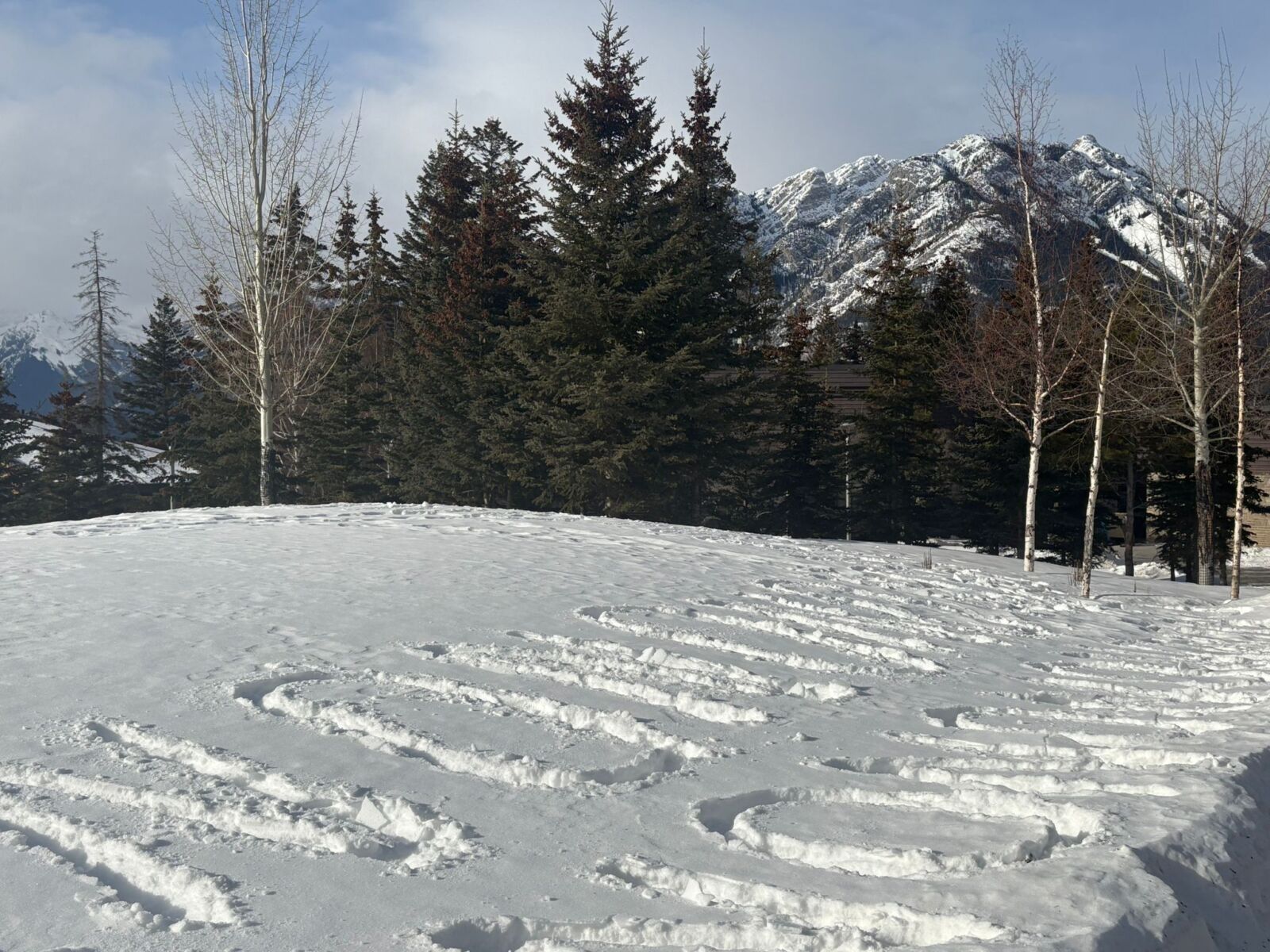
Jessica Bebenek: [on the preparatory ‘snow sketches’ made before the performance]
The very first one that I did was a disaster. It was terrible. I made the letters way too big. As someone who’s done a lot of typography-based art through printmaking and hand-lettering, I have a pretty good sense of how much space a word will take up on the page when I start handwriting it. I don't really have to do a sketch. With the first snow sketch—I made it, like, four times bigger than I meant for it to be. It is completely different—when you are the pen versus you are holding the pen.
Dave Drayton: Have you done stuff where you are the pen before? You’ve mentioned your knitted poems, but I guess there’s another instrument there between you and the finished work. Have you done stuff before that is just… the body as the pen?
Jessica Bebenek: I think when I'm doing the knitted work, it's a lot more planned out because it has to be. Knitting is a very structured process. I make all of the decisions and then I execute it in the knitting, so I'm not making any creative decisions during the knitting. Whereas, when I was doing this snow writing… all I could do was look at the canvas, the area I wanted to write on. I could just look at it for a really long time and visualize as best I could.
Dave Drayton: You can't act without ruining the canvas.
Jessica Bebenek: Exactly! That's what was so interesting—I couldn't do a sketch in the area itself without ruining the canvas, as you say. And so that, I think, lent the performance this air of imperfection that was really important to the work itself. As I realized, imperfection is a real sticking point for me. I think I'm leaning more and more into work that is in-process and imperfect. Snow as a medium is so impermanent. And when you make a mistake, you can't go back.
You ran up to me on the day of, before the performance, angry, like, “Someone walked on the hill!” I was like, “No, that happened… like, a week ago.” [laughter] But that is something that it's like, okay, well, I don't own this piece of land, right? Or even if I do own it, I can’t control whether someone walks on the land. And, even so, the idea that they ‘ruined my canvas’ is not the case, right? That's something I also really like about doing these sorts of DIY public artworks—that I don't own the space, and I don't even own my work once I've made it. And that is something that feels really important to me.
Dave Drayton: I don't know if this is a silly question if I ask it in a simple way, but I'm worried I'll make it too convoluted if I try and articulate it other ways. Do you think of this as an artwork or a poem?
Jessica Bebenek: That's a good question. I… like… calling things poems. Because I like to push against the edge of what a poem is. So, in good faith, no, it's not a poem, but I like calling it a poem.
Dave Drayton: Good faith to who?
Jessica Bebenek: You know what I think.
Dave Drayton: Have you just contradicted yourself, Jess?
Jessica Bebenek: Yes, but that's the point. [laughter] What do you think?
Dave Drayton: I think calling it a poem is a good way of reinforcing what you were talking about with pursuing things that are in-process and imperfect. Like, it's one thing to have a poem that's published in a journal, and then it appears in a collection that comes after that, and it's been a bit tweaked. It’s like trapping a poem. So that's maybe a more conventional way of thinking about things still being alive and in flux. But I think calling this a poem is a greater gesture towards pursuing things in-process, things that are imperfect. And to your point, which I think I'm in a very similar camp of, pushing at what a poem might be.
Jessica Bebenek: I think it's very interesting to think about the fact that it's still there right now. I even went back the next day and took some pictures and it already looked different the next day. Because overnight, it had been around the freezing point, so I think the snow had thawed and frozen a little bit. If we were stuck around -10C, it would probably have stayed very much the same. But it… it's still out there, in whatever form it's in. It will be gone… soon. But this idea that it's still there and changing, and even if it's under another layer of snow, it's still there. And people are noticing it and being like, “What is that? I don't understand it.” That is very interesting to me, that it's out there being looked at, being destroyed, and destroying itself just through the act of… being nature.
Dave Drayton: It's mad to think… I don't think I've ever done, nature work before. But it's wild, even when the snow is gone, it's not gone.
Jessica Bebenek: Oh, that's interesting.
Dave Drayton: It'll melt, but… I don't know if it gets too fucking hippy-dippy, but—it's not going to be there, obviously, and even now, it may not even be recognizable—but, when it melts, it's still the work, the performance. But it's also the record of that performance left on the environment. It'll dissipate and dilute, but it doesn't ever disappear, which is wild. Impossible to trace after that. Wild to think about.
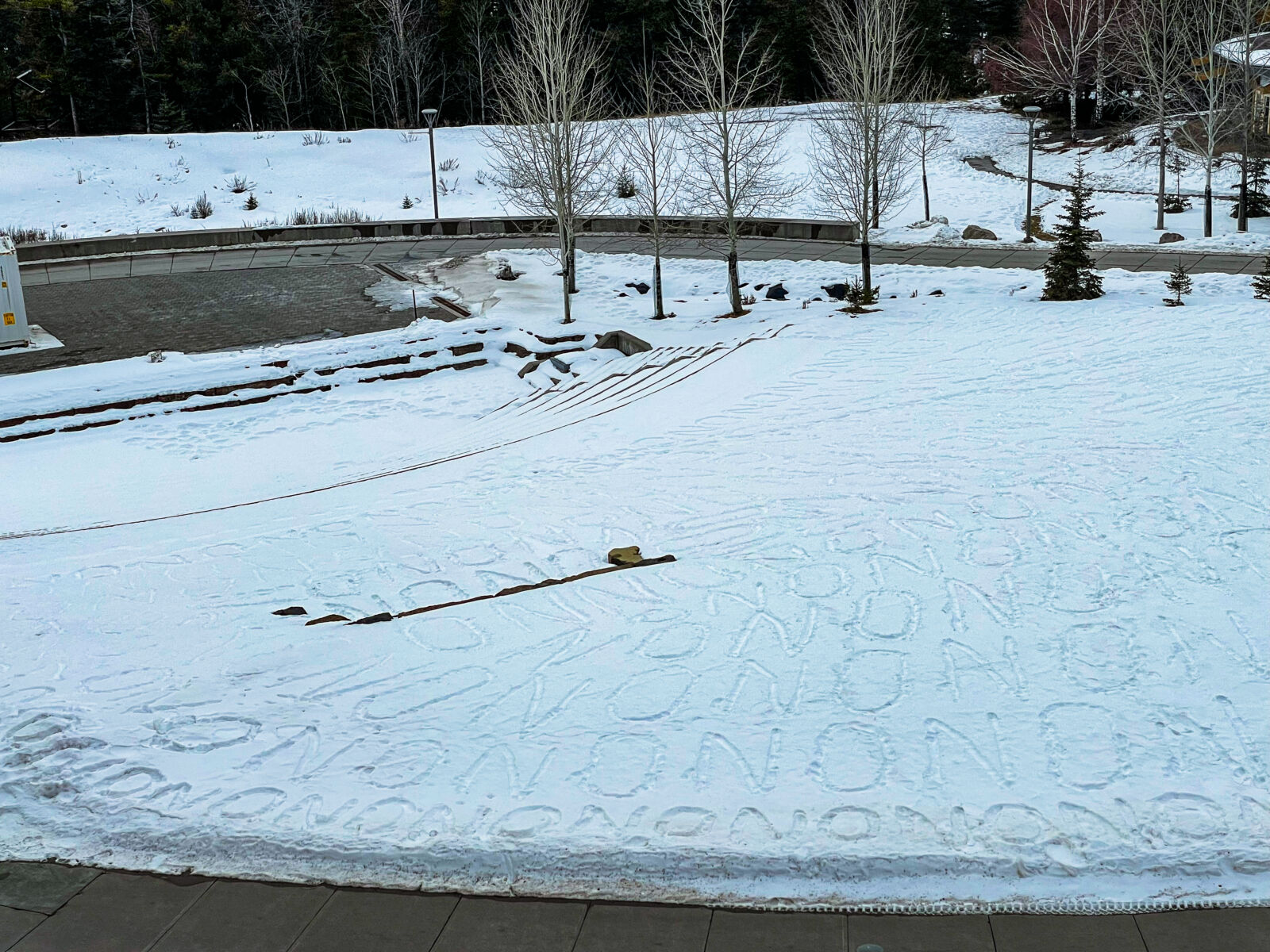
Jessica Bebenek: I think a lot—and maybe you do, too, with your poem maps—about the trace of an action in an environment. I almost imagine some kind of… a light that is where my body was. Like a ghost. Going on and on in that place. Not in a literal sense, but I think that's what you're talking about with the idea that the action happened in the place and therefore it's still lingering in the place. So in that sense, I think we're entering more of the realm of performance art, which, in better faith, I think what we did is performance art.
One of the best pieces of advice I ever got about doing performance art is that it doesn't matter if anyone sees you do it—it matters that you did it. And when they told me that, I thought, ‘Oh, it's like a spell. It's like casting a spell.’ It doesn't need to be witnessed. What’s important is the fact that you did it and that energy is out in the world.
Dave Drayton: It makes me… How can I articulate this without thinking about truth and lies? I think maybe in that view of casting spells or leaving a record that's not necessarily a mediated record… Okay—if you did that by yourself, I don't think you could lie about it. Like, if you lied to me: “Oh, I did this performance work and part of it was that it's not meant to be documented”, I think it would be clear if that was not the case. There’s a kind of weight behind this statement, even if there's no further record of it, that I think would be identifiable.
Jessica Bebenek: Oh, that's interesting. Identifiable by who, or how, or you mean in the telling?
Dave Drayton: You could sense that there was truth in that statement. I think if you hadn't done that and you were, like, “Well, the work's conceptual to the degree that I can just say I've done it, and I haven't.” I think it would be identifiable, the untruth in that. I don't know.
Jessica Bebenek: Hmm. I mean, I can only say in that I would not say that I had made a work of conceptual art that I didn't—that the doing is the important part. But I went back and forth a lot on whether or not to even record what we did. I was already thinking about this, and then Amy Malbeuf (who's an artist who was at the Banff Centre while we were there) gave a talk about her performance art and when she does or does not record something. Performances that she does alone or with one other person who's photographing it. Performances that she’s done which she hasn't released yet, and she's still waiting for the right time to release years later. It gave me so much to think about. What is the purpose of recording a piece of performance art? Because… when I look at the recording now, it's interesting, but it does not capture what we did.
Dave Drayton: No. I don't think it could. No. You've got a camera set up, but even if it was—and this isn't shade on technology or documentaries—but even with a crazy crew, fifty grand production budget, there would be something intangible in the performance that isn’t going to be able to be replicated in documentation of it.
Jessica Bebenek: That's what makes me think of spell work, too. You just actually have to be there to witness the art that's being made. And that's also why I realized that it had to be a performance—that it's not just a thing that I make and then the finished product is the art. That could certainly be the case.
Dave Drayton: The doing is as much a part of it.
Jessica Bebenek: I would say the doing is the artwork, and it is interesting to see how it changes over time. Whereas with the sketches that I did, I was doing that to make a finished piece of art, which is why I didn't record it. But with this, I think of it as a performance. So maybe I was being disingenuous calling it a poem.
Dave Drayton: But it's the performance of a poem.
Jessica Bebenek: Yes, actually, that's a really good way of thinking about it. It's like when I perform a poem that I've written. That's what it's like.
Dave Drayton: Maybe you've already been thinking about this, but to return to an earlier discussion we were having then, what's the score for this performance look like?
Jessica Bebenek: I don't think there is one. Or, the score is the video, maybe? And the actual performance… you had to be there for it. Especially with a piece like this, it's on a very three-dimensional piece of land, and I think in the video we got the best angle we could to see most of it, but moving around the space is completely different. You see all the different ways that the sun hits things. What you can and cannot see from the different angles, I think, is really fascinating.
Dave Drayton: How quickly you can be obscured by the slight incline is crazy.
Jessica Bebenek: Yeah, because it's actually a rounded hill, it goes down on both sides, and one side more so than the other. But you have to move around the space. There's no angle where you can see everything.
Sorry, I'm changing topics, but I really want to ask you what you thought about your participation—your role when I asked you to be a part of the performance and what that embodied experience was like?
Dave Drayton: When you asked if I would be interested in participating, I immediately thought, yes. For the pure fact that I like pushing at the idea or the edges of what a poem can be. I really like the idea of collaboration. I was like, okay, yes, I'll jump in. Then I felt, as we developed it, that I may have been in over my head.
Jessica Bebenek: Oh, how so?
Dave Drayton: How do I say this? The legitimacy of the performance. I felt as if you had greater experience than I do in performance. And so I was like, Oh fuck, I don't want to drop the ball. As much as I enjoy performance stuff, and as much as I enjoy weird stuff, there is a part of my brain, or a voice that says, “Get a real job!” [laughter] And that's been in my own work as well. I need to feel I'm being legitimate in this. Worrying I’ve committed to more than I can deliver. It's like, okay, I need to genuinely get into the performance of it in a very deliberate and conscious state. I didn’t want to be approaching myself and sensing… sensing…
Jessica Bebenek: Hesitancy?
Dave Drayton: Hesitancy, or any sense of illegitimacy in what I contributed, or in my view of the piece, or in myself.
Jessica Bebenek: This is something—I just showed you the “Shia LaBeouf” Rob Cantor piece. Like, no matter how fucking silly what you're doing is, I really believe you have to commit 100%.
Dave Drayton: Right.
Jessica Bebenek: So did you feel like there was a lot of responsibility on you? Or was it more self-imposed, or…
Dave Drayton: I think it was all self-imposed. You were the ideal, dream collaborator because at all stages, I felt Informed, consulted, considered, encouraged, supported.
Jessica Bebenek: Yay! And consent was really important to me in creating a piece like this with someone. Even though you’re playing the aggressor in the scene, I never ever wanted you to feel uncomfortable about doing something that I was proposing. I think something I said, too, was, “No matter what happens, it's a part of the performance.”
Dave Drayton: Yeah, we can't fuck it up because there's no perfect version of the performance.
Jessica Bebenek: We can't fuck it up! And that's something that lends itself to that idea of imperfection. Also, in the snow as a medium—once you do something, it's done. You can't take that back. That's something I had to work with as the person doing the writing. I think, because I have a real perfectionist bent, I realized through doing all of those sketches—whatever happens, happens with this shit. It gave me a lot of perspective that I could take into the performance. Also, I think you and I were just really on the same page, and so I trusted that whatever happened, we would be on the same page in the performance. Ultimately, all we could do was practice, and then sort of prepare contingencies. So, like, if you fall down, okay, what do we do then? That kind of a thing. Dave Drayton: What's everything that could go wrong, and how we go to pivot when it does?
Jessica Bebenek: Exactly.
Dave Drayton: But then it went better than expected!
Jessica Bebenek: At the end, when you dropped me, you were like, “That was the best drag we ever did!” It was!
Dave Drayton: But compared to the difficulties of all the practices and then thinking that that was going to be the most difficult yet because of the distance and the incline. Also, working out the step-step-pull, rather than trying to get a smooth drag. Jankier rhythm, still consistent.
Jessica Bebenek: I think the jankiness worked really well, too.
Dave Drayton: And it went so well. Like, it was leagues above any of our practices.
Jessica Bebenek: It's horrifying to watch. I just rewatched it. It's disgusting. I love it. It's really upsetting. You're a monster.
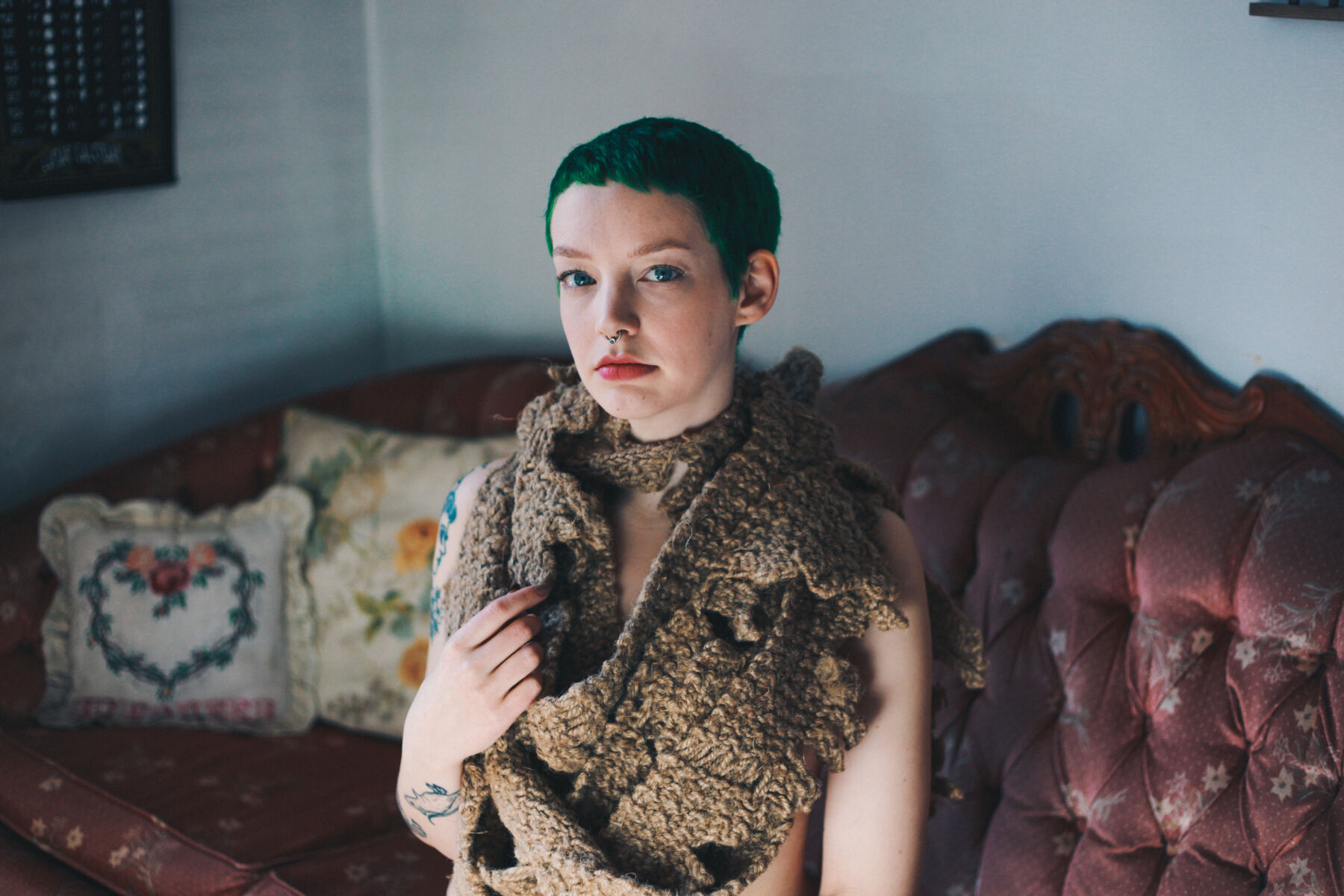
Jessica Bebenek is an interdisciplinary poet, bookmaker, and educator living between Tiohtià:ke (Montreal) and an off-grid shack on unceded Anishinaabe territory. She works as a risograph printer & bookmaker at Concordia University’s Centre for Expanded Poetics, where she organized the international Occult Poetics Symposium. k2tog, her collection of knitting patterns for poems, was released by Berlin’s Broken Dimanche Press and her twelve-hour knitting performance The Waste Land was featured at Toronto's Nuit Blanche.
Bebenek’s writing has been nominated for the Journey Prize, the Pushcart Prize, the 2024 CBC Poetry Prize, and in 2021 she was a finalist for the Writer’s Trust Bronwen Wallace Award for Emerging Writers in Poetry. Her recent chapbooks include You Don’t Get Out Much (2024), I REMEMBER THE EXORCISM (Gap Riot Press, 2022), and What is Punk (2019). Her first full-length poetry collection, No One Knows Us There (Book*hug 2025), was shortlisted for two Quebec Writers’ Federation’s awards and named a Best Book of 2025 by the CBC. She spends a lot of time thinking about chronic pain, refusal, empathy, regeneration, slow time, anti-capitalism, gendered labour, garbage, and textiles.
@notyrmuse www.jessicabebenek.art
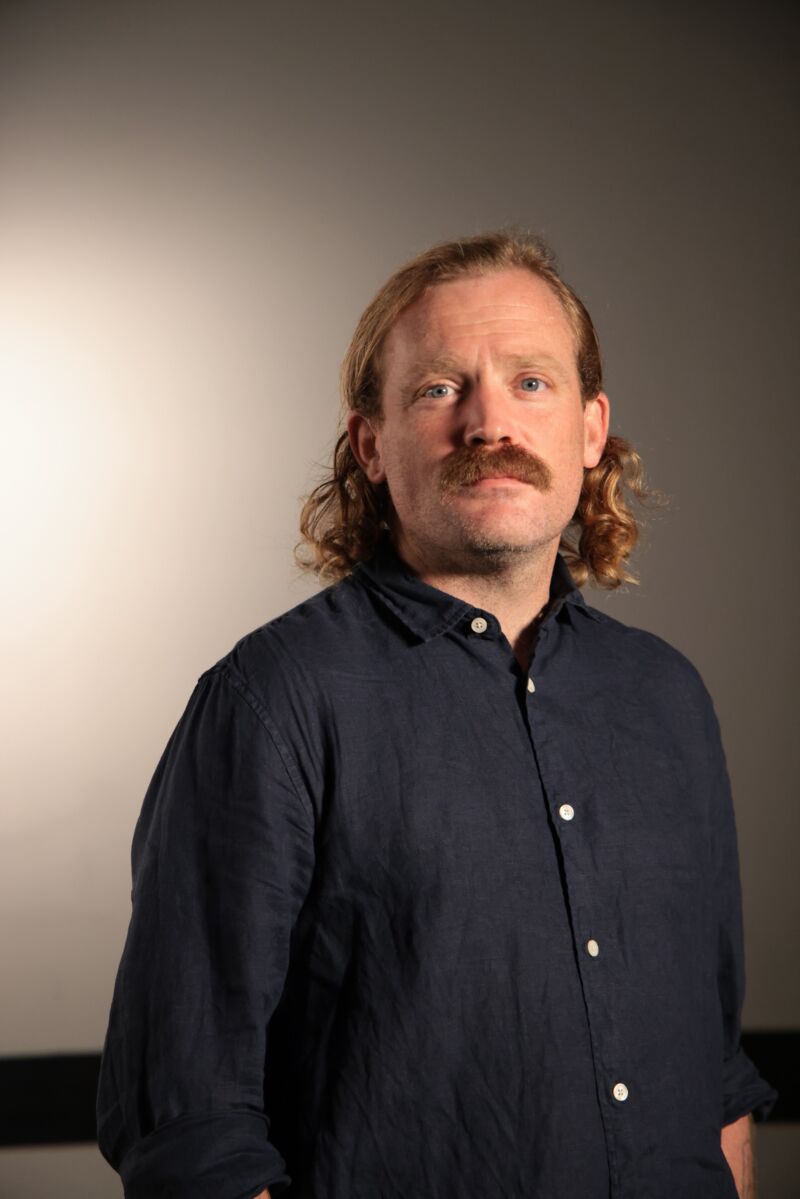
Dave Drayton was an amateur banjo player, founding member of the Atterton Academy, lecturer in Creative Writing at the University of Technology Sydney, and the author of British P(oe)Ms (Beir Bua Press), E, UIO, A: a feghoot (Container), A pet per ably-faced kid (Stale Objects dePress), P(oe)Ms (Rabbit), and other works.